Carrying camera gear on a hike is a balancing act — you need enough protection to keep a $1,000+ camera safe, enough comfort to walk 10 miles without hating your life, and quick enough access to not miss the shot when the light hits perfectly. The best backpack for hiking with camera gear handles all three without compromising. I’ve hiked hundreds of miles across Michigan’s trails with various packs, and these seven are the ones I’d actually buy.
Quick Picks: Top 3
| Backpack | Price | Best For |
|---|---|---|
| Lowepro ProTactic BP 350 AW II | ~$200 | Best all-around camera hiking pack |
| Peak Design Everyday Backpack 20L | ~$260 | Most versatile (camera + everyday use) |
| Tarion Camera Backpack | ~$50 | Best budget option |
What Makes a Good Camera Hiking Backpack
I evaluated every pack on five criteria: gear protection (padded dividers, weather resistance, impact absorption), carrying comfort (hip belt, padded straps, back ventilation), access speed (can you grab your camera without removing the pack?), capacity balance (room for camera gear AND hiking essentials like water, layers, food), and tripod carry (external attachment points). A great camera hiking pack isn’t just a camera bag — it’s a hiking pack that happens to protect camera gear.
The 7 Best Hiking Camera Backpacks
1. Lowepro ProTactic BP 350 AW II — Best All-Around
The ProTactic 350 is the pack I see most often on serious hiking photographers. The SlipLock attachment system lets you customize external attachment points for tripods, water bottles, or extra pouches. The All Weather (AW) cover is built into the pack — pull it out when rain hits, tuck it back when it stops. Access is excellent: top, back, and side panels all open to your gear. The interior dividers are fully customizable, so you can configure it for whatever body + lens combo you’re carrying that day.
For a typical landscape kit (mirrorless body, 16-35mm zoom, 70-200mm zoom, filters, batteries), there’s room left for a rain jacket, snacks, and a water bottle in the side pocket. The hip belt distributes weight well on longer hikes.
Key specs: 16L camera capacity, fits 15″ laptop, AW rain cover built-in, SlipLock attachment system, tripod mount, back panel access, 1.76 kg.
- Pros: Excellent protection and access, built-in rain cover, customizable SlipLock system, comfortable for day hikes, back panel access keeps camera clean
- Cons: $200 isn’t cheap, heavy for the size at 1.76 kg empty, limited space for non-camera hiking gear, looks tactical (not everyone’s style)
- Best for: Dedicated landscape photographers doing day hikes with 2-3 lenses
- Price: ~$200
2. Peak Design Everyday Backpack 20L — Most Versatile
Peak Design’s Everyday Backpack straddles the line between camera bag and everyday pack better than anything else on the market. The FlexFold dividers origami-fold to create camera compartments that you can completely remove when you want a regular backpack. Side access panels let you grab your camera without opening the top. The MagLatch top closure is genuinely clever — it adjusts instantly to different load heights.
The weatherproof shell handles drizzle without a rain cover (though a heavy downpour needs the optional rain fly). At 20L, it’s sized right for a camera body, 2-3 lenses, plus a jacket and personal items. The external carry straps handle a tripod cleanly.
Key specs: 20L capacity, FlexFold dividers (removable), MagLatch closure, dual side access, weatherproof shell, fits 15″ laptop, external carry straps, 1.24 kg.
- Pros: Doubles as everyday pack, side camera access, weatherproof shell, excellent build quality, lightweight at 1.24 kg, doesn’t scream “camera bag”
- Cons: $260 is the most expensive here, hip belt is optional extra, limited padding compared to dedicated camera packs, 20L can feel tight with big kits
- Best for: Photographers who want one pack for both hiking with camera gear and daily use
- Price: ~$260
3. Tarion Camera Backpack — Best Budget Pick
At ~$50, the Tarion is proof that you don’t need to spend $200+ for functional camera protection on the trail. The padded dividers are configurable, the rain cover is included (not built-in like the Lowepro, but it works), and there’s a dedicated tripod holder on the bottom. Is it as comfortable or well-built as the ProTactic? No. But for beginners or casual hikers who do a few camera hikes per year, it handles the job without emptying your wallet.
Key specs: ~18L capacity, padded dividers, included rain cover, tripod holder, side access, fits 15″ laptop, 0.95 kg.
- Pros: Under $50, rain cover included, tripod holder, side access, surprisingly roomy, lightweight
- Cons: Thinner padding than premium bags, zippers feel cheap, no hip belt (shoulder only), less comfortable on long hikes
- Best for: Budget-conscious beginners or casual hikers who need basic camera protection
- Price: ~$50
4. f-stop Lotus 32L — Best for Multi-Day Hikes
If you’re doing multi-day hikes or overnight backpacking trips with camera gear, the Lotus 32L is built for it. The Internal Camera Unit (ICU) is a separate padded insert that sits inside the pack — remove it and you have a full 32L hiking backpack. The suspension system (aluminum frame, padded hip belt, load lifters) is genuine hiking-pack quality, not camera-bag-pretending-to-be-a-hiking-pack quality. This is the pack that backcountry landscape photographers trust.
Key specs: 32L total (ICU options from Small to Large), aluminum frame, adjustable torso, padded hip belt, rain cover, hydration compatible, 2.0 kg.
- Pros: Real hiking pack comfort and suspension, removable ICU system, 32L for multi-day trips, hydration compatible, excellent back ventilation
- Cons: $250 for the pack + ICU sold separately ($50-$100), heavier at 2 kg, back access to ICU only (no side grab), overkill for day hikes
- Best for: Backcountry and multi-day hiking photographers who need serious carrying comfort
- Price: ~$250 (pack only, ICU separate)
5. Shimoda Explore V2 25L — Best Quick Access
Shimoda designed the Explore series specifically for adventure photographers, and the roller-style rear access shows it. Drop the pack, unzip the back panel, and your entire kit is laid out flat — like opening a suitcase. You can grab any lens or body instantly. The Core Unit system (similar to f-stop’s ICU) means you can swap camera inserts for different shoots. Rain cover is built-in, the hip belt is comfortable for extended hikes, and the 25L size balances camera capacity with hiking room.
Key specs: 25L total, Core Unit system (sold separately), full rear panel access, built-in rain cover, side tripod carry, padded hip belt, 1.46 kg.
- Pros: Fastest gear access via full rear panel, Core Unit modularity, built-in rain cover, comfortable for day hikes, light at 1.46 kg
- Cons: $220 + Core Unit ($70-$90), rear access means setting pack down (no side grab), 25L is snug for non-camera gear
- Best for: Adventure photographers who want the fastest access to their full kit
- Price: ~$220 (pack only)
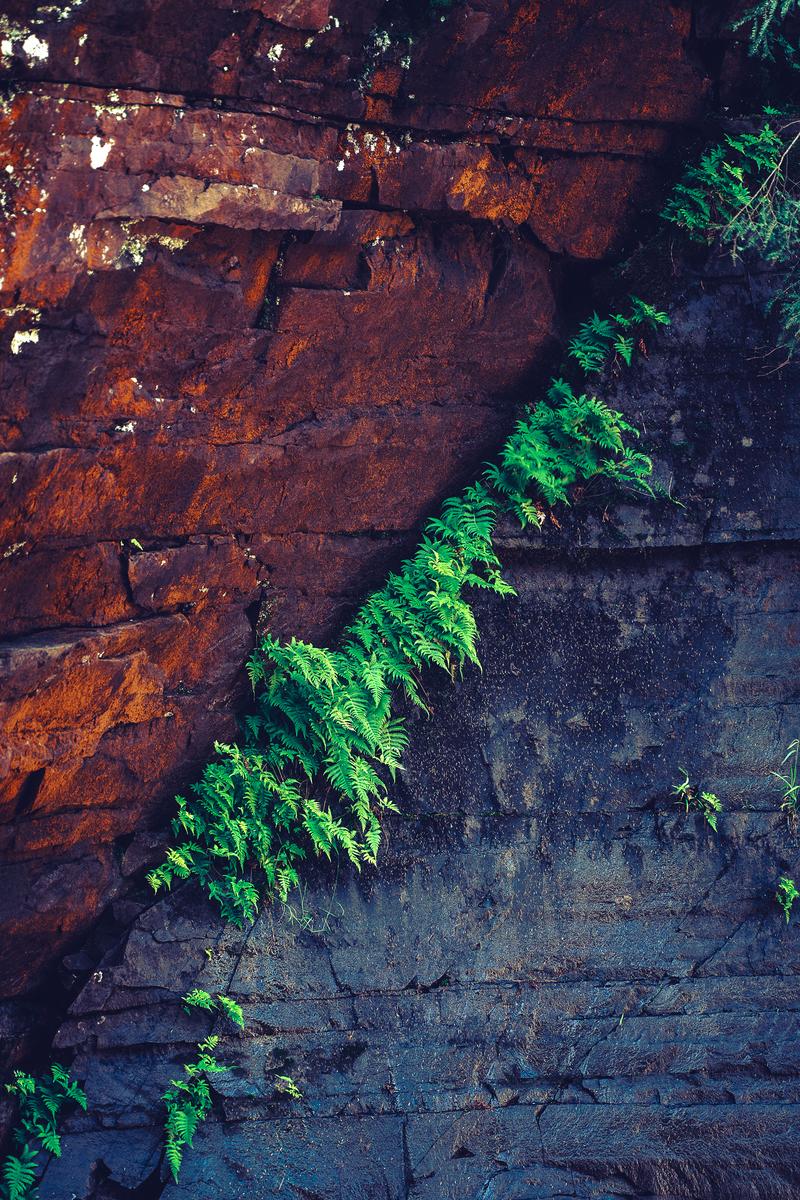
From the Photographer
Layered Rock Ferns Sandstone
Layered sandstone and ferns — the reward at the end of the trail
Zeefeldt Photography
— Fine art prints starting at $95
6. Thule Covert DSLR Backpack — Best Urban-to-Trail
The Covert is Thule’s crossover camera pack — clean enough for urban use, capable enough for trail use. The SafeZone camera compartment has a rigid structure that protects gear without the bulk of a full camera backpack. The roll-top closure lets you expand the main compartment for extra layers on longer hikes. Side access panel for quick camera grabs. Thule’s build quality is consistently excellent.
Key specs: 24L capacity, SafeZone camera compartment, roll-top main compartment, side access, fits 15″ laptop, external attachment points, 1.4 kg.
- Pros: Good-looking design works everywhere, rigid camera protection, roll-top expands capacity, Thule build quality, lightweight
- Cons: ~$180, camera compartment is smaller than dedicated packs, no hip belt, limited padding for heavy loads
- Best for: Photographers who want one pack that transitions from city to trail cleanly
- Price: ~$180
7. Amazon Basics Large DSLR Camera Backpack — Cheapest Functional Option
At $35, this is the bare minimum for carrying camera gear on a hike. Padded interior, adjustable dividers, rain cover, tripod strap. That’s it — no hip belt, no sophisticated access, no fancy materials. But it works. I’ve seen beginners use this pack for a full season of weekend hikes before upgrading. If you’re testing whether landscape photography is a hobby you’ll stick with, start here and upgrade when you know.
Key specs: ~20L, padded dividers, rain cover included, tripod strap, fits 15″ laptop, 0.88 kg.
- Pros: $35, rain cover included, lightweight, functional for basic needs, good starter pack
- Cons: Minimal padding, no hip belt, uncomfortable on long hikes, thin straps, zippers feel fragile
- Best for: Absolute beginners testing the hobby before investing in a proper pack
- Price: ~$35
Comparison Table
| Backpack | Capacity | Weight | Rain Cover | Hip Belt | Side Access | Price |
|---|---|---|---|---|---|---|
| Lowepro ProTactic 350 | 16L camera | 1.76 kg | Built-in | Yes | Yes | $200 |
| Peak Design Everyday 20L | 20L | 1.24 kg | Weatherproof shell | Optional | Yes | $260 |
| Tarion Backpack | ~18L | 0.95 kg | Included | No | Yes | $50 |
| f-stop Lotus 32L | 32L | 2.0 kg | Included | Yes | No | $250+ICU |
| Shimoda Explore V2 25L | 25L | 1.46 kg | Built-in | Yes | No (rear) | $220+CU |
| Thule Covert | 24L | 1.4 kg | No | No | Yes | $180 |
| Amazon Basics Large | ~20L | 0.88 kg | Included | No | No | $35 |
How to Pack Your Camera Hiking Backpack
Weight Distribution
Heavy items (camera body, big lens) should sit close to your back and centered vertically. This keeps the weight balanced and prevents the pack from pulling you backward on steep terrain. Lighter items (filters, batteries, snacks) go in outer pockets.
Accessibility Priority
Put the gear you’ll grab most often in the most accessible spot. For landscape photography, that’s usually your main body + wide-angle lens in the side-access compartment, with longer lenses stored in the main compartment. Filters and batteries go in hip belt pockets or top pockets.
Weather Protection Layering
Even with a rain cover, use a dry bag or ziplock bags for extra protection around your camera body and lens during heavy rain. Electronics (batteries, phone) should be in waterproof pockets. A microfiber cloth in an accessible pocket lets you wipe down gear quickly.
Frequently Asked Questions
Can I use a regular hiking backpack for camera gear?
Yes, with a camera insert/cube. Brands like Tenba, Peak Design, and f-stop make padded camera inserts ($30-$90) that fit inside regular hiking packs. This approach gives you the best hiking comfort (proper hiking pack suspension) with adequate camera protection. It’s actually what many backcountry photographers prefer over dedicated camera bags.
How do I carry a tripod on a camera backpack?
Most camera hiking packs have external tripod attachment points — either side straps, bottom holders, or center-column clips. The most secure method is attaching at two points: one at the base of the pack and one higher up. Keep the tripod vertical with legs pointing up. For carbon fiber tripods, direct attachment is fine; for heavy aluminum tripods, use a dedicated tripod holder to distribute the weight.
What size camera backpack do I need for hiking?
For day hikes with 1 body + 2-3 lenses: 15-25L. For multi-day hikes: 25-35L. For lightweight setups (1 body + 1 lens): even a 10-15L sling bag works. The key is balancing camera space with room for hiking essentials — water, food, layers, first aid. Don’t buy a pack that’s all camera and no hiker.
Is side access important for a camera hiking backpack?
Very. Side access lets you swing the pack around one shoulder and grab your camera without removing the pack or setting it down. On a trail, this means you can go from hiking to shooting in seconds. Packs without side access require you to stop, remove the pack, and open it from the back or top — you’ll miss spontaneous shots.
Do I need a rain cover for my camera backpack?
Yes, always. Even “weatherproof” packs will eventually let water in during sustained rain. A rain cover ($10-$15 if not included) is essential insurance. Bright-colored covers (yellow, orange) also increase your visibility on trails in low-light conditions, which is a safety bonus.
Related Guides
- Best Affordable Cameras For Landscape Photography
- Best Affordable Cameras For Nature Photography
- Best Affordable Tripods For Wildlife Photography
- Best Affordable Cameras For Landscape Photography For Beginners
Final Verdict
The Lowepro ProTactic BP 350 AW II at $200 is the best all-around hiking camera backpack — excellent protection, built-in rain cover, comfortable carry, and quick side access. If you need a pack that works for hiking AND everyday life, the Peak Design Everyday Backpack 20L is unmatched in versatility. And at $50, the Tarion Camera Backpack proves you don’t need a big budget to carry camera gear safely on the trail.