Aerial photography transforms how you see landscapes — and modern drones make it accessible to anyone. As a landscape photographer who added a drone to my kit three years ago, I can say it changed my work more than any single camera purchase. The best beginner drone for aerial photography needs to be easy to fly (so you focus on composition, not controls), produce high-quality stills and video, and comply with FAA regulations. Here are my seven picks for 2026.
Quick Picks: Top 3 Beginner Drones
| Drone | Price | Best For |
|---|---|---|
| DJI Mini 4 Pro | ~$760 | Best overall for photo quality + portability |
| DJI Mini 3 | ~$400 | Best budget entry point |
| DJI Air 3 | ~$1,100 | Best dual-camera versatility |
Important: FAA Registration Rules
Before buying a drone, know the rules. In the US, all drones weighing 0.55 lbs (250g) or more must be registered with the FAA ($5 for 3 years). Drones under 250g (like the DJI Mini series) are exempt from registration for recreational use but still must follow airspace rules. You cannot fly in national parks, over people, near airports, or above 400 feet without authorization. The FAA TRUST test (free, online, takes 20 minutes) is required for all recreational drone pilots.
The 7 Best Beginner Drones for Aerial Photography
1. DJI Mini 4 Pro — Best Overall Beginner Drone
The Mini 4 Pro is DJI’s best sub-250g drone, and it’s the one I recommend to most beginners. At 249g, it’s under the FAA registration threshold for recreational use. The 1/1.3″ CMOS sensor shoots 48MP photos and 4K/60p video with excellent dynamic range. Omnidirectional obstacle sensing means it avoids trees, buildings, and other hazards automatically — critical for beginners still learning spatial awareness while flying.
The image quality is genuinely impressive. I’ve made 16×20″ prints from Mini 4 Pro files that look sharp and detailed. The 48MP mode gives you cropping headroom, and shooting in RAW (DNG format) provides plenty of latitude for post-processing landscapes.
Key specs: 249g, 1/1.3″ CMOS, 48MP photos, 4K/60p HDR video, omnidirectional obstacle sensing, 34 min flight time, 20km transmission range, ActiveTrack 360°.
- Pros: Under 250g (no FAA registration for recreational), 48MP with excellent quality, omnidirectional obstacle avoidance, long flight time, compact and travel-friendly
- Cons: ~$760 for standard RC, ~$960 with RC 2 controller (screen included), struggles in high wind (light weight), smaller sensor than Air/Mavic series
- Best for: Beginners who want the best photo quality in a portable, regulation-friendly package
- Price: ~$760 (RC-N2 controller) / ~$960 (RC 2 with screen)
2. DJI Mini 3 — Best Budget Entry
The Mini 3 drops the “Pro” features (no omnidirectional obstacle sensing — only forward/backward/downward) to hit a more accessible $400 price point. The 1/1.3″ sensor is the same as the Mini 3 Pro (previous generation), shooting 12MP photos and 4K/30p video. For aerial landscape photography, 12MP is enough for web use and prints up to 16×20″. The true vertical shooting mode (rotates the camera 90°) is excellent for social media and portrait-orientation landscape compositions.
Key specs: 248g, 1/1.3″ CMOS, 12MP photos, 4K/30p HDR video, forward/backward/downward obstacle sensing, 38 min flight time.
- Pros: Under $400, under 250g, good photo quality, true vertical shooting, 38-minute flight time (longest here), lightweight
- Cons: Only 12MP, limited obstacle sensing (no side/top), no ActiveTrack, older controller
- Best for: Budget-conscious beginners who want to try aerial photography without a big investment
- Price: ~$400
3. DJI Air 3 — Best Dual-Camera Versatility
The Air 3 is DJI’s mid-range drone with a standout feature: dual cameras. A wide-angle (24mm equiv) and a medium telephoto (70mm equiv), both with 1/1.3″ sensors shooting 48MP. For aerial landscape photography, this means you can capture both wide establishing shots and compressed telephoto compositions without landing to swap anything. The telephoto perspective from altitude creates unique images that wide-angle-only drones can’t replicate.
Key specs: 720g, dual 1/1.3″ sensors, 48MP each, 4K/100p HDR, omnidirectional obstacle sensing, 46 min flight time, 20km range.
- Pros: Dual cameras (wide + telephoto), 48MP per camera, 46-minute flight time, omnidirectional obstacle sensing, excellent in wind
- Cons: $1,100 (over 2x the Mini 3), requires FAA registration (720g), larger and less portable, overkill for casual users
- Best for: Serious aerial photographers who want creative flexibility and longer flight times
- Price: ~$1,100
4. DJI Mini 2 SE — Cheapest Capable Drone
At ~$300, the Mini 2 SE is the cheapest drone I’d recommend for aerial photography. The 1/2.3″ sensor (12MP) is smaller than the Mini 3/4 Pro’s sensor, so image quality takes a hit — but in good light, the aerial perspectives more than make up for it. No obstacle sensing means you need to be more careful, but beginners flying in open landscapes (fields, coastlines, above treelines) typically have plenty of clearance.
Key specs: 246g, 1/2.3″ CMOS, 12MP, 2.7K/30p video, no obstacle sensing, 31 min flight time, 10km range.
- Pros: $300 is the cheapest viable drone, under 250g, 31-minute flights, GPS hover stability, beginner-friendly
- Cons: Small sensor limits quality, no obstacle sensing, 2.7K max video (no 4K), no RAW photos
- Best for: Budget beginners testing whether drone photography is for them
- Price: ~$300
5. DJI Mavic 3 Classic — Best Image Quality for Stills
If aerial photography is your primary goal and budget allows, the Mavic 3 Classic has the best camera of any consumer drone: a 4/3″ CMOS sensor (same size as Micro Four Thirds cameras) that shoots 20MP with exceptional dynamic range and low noise. The larger sensor captures landscape scenes with a quality level that rivals ground-based cameras. At $1,500, it’s the most expensive option here, but the image quality justifies it for serious photographers.
Key specs: 895g, 4/3″ CMOS, 20MP, 5.1K/50p, omnidirectional obstacle sensing, 46 min flight time.
- Pros: Best-in-class image quality (4/3″ sensor), exceptional dynamic range, 46-minute flights, omnidirectional sensing
- Cons: $1,500, requires FAA registration, heavy (895g), single camera (no telephoto)
- Best for: Photographers who prioritize image quality and plan to print aerial landscape photos
- Price: ~$1,500
6. Autel EVO Nano+ — Best Non-DJI Option
If you want an alternative to DJI’s ecosystem, the EVO Nano+ is the strongest competitor at the sub-250g level. The 1/1.28″ sensor shoots 50MP stills with RYYB color filter (captures more light). Three-way obstacle avoidance and a SkyLink transmission system with 10km range round out the specs. Autel’s drone laws compliance and app are slightly less polished than DJI’s, but the hardware is competitive.
From the Photographer
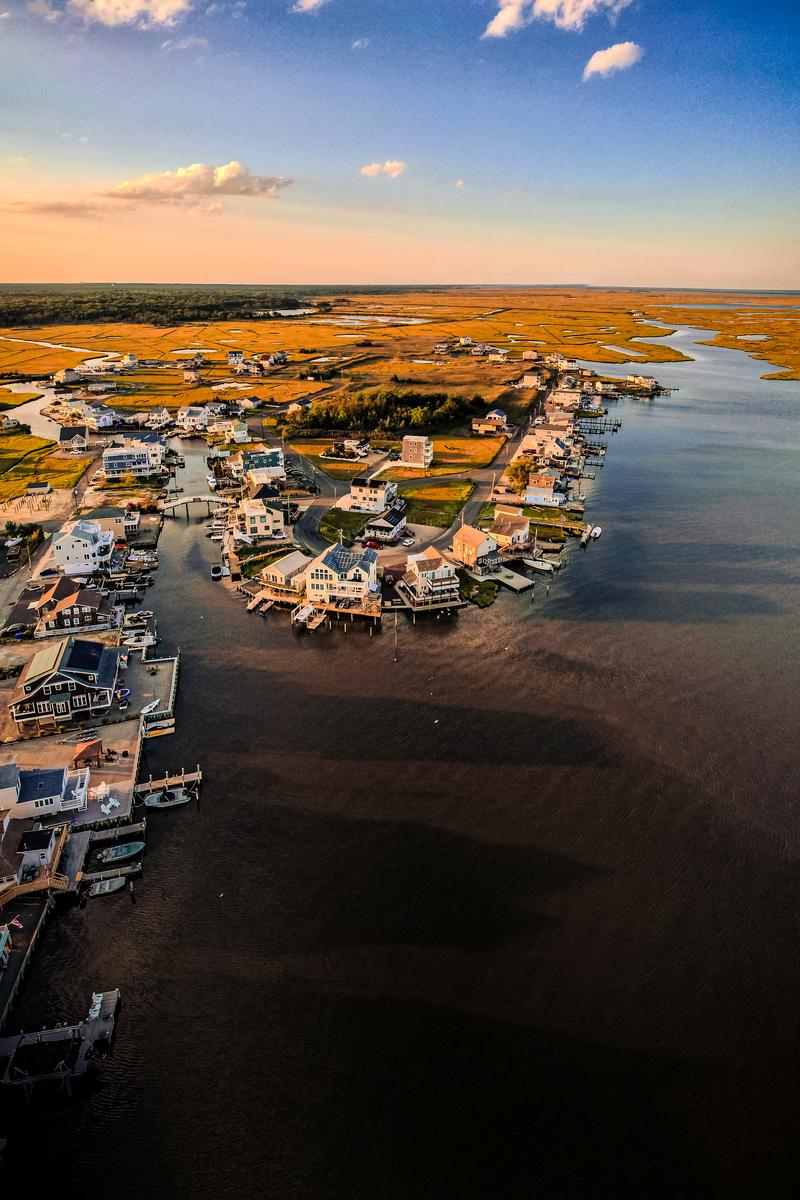
Aerial Coastal Town Sunset
A coastal town glowing at sunset — captured from above
Zeefeldt Photography
— Fine art prints starting at $95
Key specs: 249g, 1/1.28″ RYYB CMOS, 50MP, 4K/30p HDR, three-way obstacle sensing, 28 min flight time.
- Pros: 50MP with RYYB sensor, under 250g, solid build quality, DJI alternative
- Cons: ~$800, shorter flight time (28 min), less polished app experience, smaller accessory ecosystem
- Best for: Photographers who want a non-DJI alternative with competitive specs
- Price: ~$800
7. Holy Stone HS720G — Budget Hobby Drone
At ~$250, the HS720G is a GPS-equipped camera drone for true budget beginners. The 4K camera (though heavily processed from a small sensor) captures basic aerial perspectives. GPS hold, return-to-home, and Follow Me mode work reasonably well. Image quality is not in the same league as DJI — but for someone who wants to experiment with aerial perspectives before committing to a $700+ drone, it’s functional.
Key specs: 360g, 4K camera (1/3″ sensor), GPS, return-to-home, 26 min flight time, 1km range.
- Pros: Under $250, GPS hold and RTH, functional camera, good learning platform
- Cons: Image quality far below DJI, requires FAA registration (360g), limited range, plastic build
- Best for: True beginners wanting to learn drone flying before investing in photo quality
- Price: ~$250
Comparison Table
| Drone | Weight | Sensor | Photo MP | Obstacle Sensing | Flight Time | Price |
|---|---|---|---|---|---|---|
| DJI Mini 4 Pro | 249g | 1/1.3″ | 48MP | Omnidirectional | 34 min | $760 |
| DJI Mini 3 | 248g | 1/1.3″ | 12MP | 3-direction | 38 min | $400 |
| DJI Air 3 | 720g | Dual 1/1.3″ | 48MP each | Omnidirectional | 46 min | $1,100 |
| DJI Mini 2 SE | 246g | 1/2.3″ | 12MP | None | 31 min | $300 |
| DJI Mavic 3 Classic | 895g | 4/3″ | 20MP | Omnidirectional | 46 min | $1,500 |
| Autel EVO Nano+ | 249g | 1/1.28″ | 50MP | 3-direction | 28 min | $800 |
| Holy Stone HS720G | 360g | 1/3″ | 4K (8MP effective) | None | 26 min | $250 |
Beginner Drone Tips for Aerial Photography
Start in Open Areas
Your first flights should be in wide-open spaces — fields, beaches, parking lots — away from trees, buildings, and people. Get comfortable with the controls before flying near obstacles. Most crashes happen in the first few flights.
Shoot in RAW
Just like with a camera, RAW files from drones give you more editing flexibility. The dynamic range of drone sensors is limited, so the ability to recover highlights and shadows in post is crucial. DJI drones shoot RAW (DNG format) — enable it.
Golden Hour From Above
Aerial photography at golden hour is magical — long shadows, warm light, dramatic contrast. The best aerial landscape photos are shot in the first and last hour of sunlight. Mid-day drone photos tend to look flat because the overhead light eliminates shadows and depth.
Get Your FAA TRUST Certificate
Before your first flight, complete the free FAA TRUST test at a recognized provider (The Recreational UAS Safety Test). It takes about 20 minutes, covers basic safety rules, and is required by law for recreational drone pilots in the US.
Frequently Asked Questions
Do I need a license to fly a drone for photography?
For recreational (hobby) use: you need the free FAA TRUST certificate and must register drones over 250g ($5 for 3 years). For commercial use (selling your aerial photos): you need a Part 107 Remote Pilot Certificate, which requires passing an FAA knowledge test ($175). Selling prints of aerial photos counts as commercial use.
Can I fly a drone in national parks?
No. Drone flights are banned in all US National Parks, National Monuments, and most National Wildlife Refuges. State parks vary by state — some allow drones, some don’t. Always check local regulations before flying. The B4UFLY app (from the FAA) shows airspace restrictions for any location.
Is the DJI Mini 4 Pro worth the extra cost over the Mini 3?
If you’re serious about aerial photography, yes. The Mini 4 Pro shoots 48MP (vs 12MP), has omnidirectional obstacle sensing (vs limited), and includes ActiveTrack for subject following. The 4x increase in resolution alone makes a significant difference for print-quality aerial landscape photos. If it’s a casual hobby, the Mini 3 at $400 is more than enough.
How windy is too windy for drone photography?
Sub-250g drones (Mini series) struggle above 20 mph sustained winds. Larger drones (Air 3, Mavic 3) handle up to 25-30 mph. For the sharpest aerial photos, aim for winds under 15 mph. Wind also drains battery faster — expect 20-30% less flight time in windy conditions. Check wind forecasts at your flight altitude (winds are stronger at 200-400 feet than ground level).
Related Guides
- Best Affordable Cameras For Landscape Photography
- Best Affordable Cameras For Nature Photography
- Best Affordable Cameras For Landscape Photography For Beginners
Final Verdict
For most beginners, the DJI Mini 4 Pro at $760 is the best balance of image quality, safety features, and regulation friendliness. Under 250g means no FAA registration for recreational use, 48MP captures detailed landscape images, and omnidirectional obstacle sensing prevents expensive crashes.
On a tighter budget, the DJI Mini 3 at $400 gets you airborne with good quality for less. And if you’re willing to invest more for the best results, the DJI Air 3 with dual cameras gives you creative options no single-camera drone can match.
The sky — literally — is the limit. Just remember to fly safe, fly legal, and fly at golden hour.