Mirrorless cameras have completely taken over the landscape photography world, and for good reason. They’re lighter, sharper on screen, and give you a real-time preview of your exposure before you press the shutter. If you’re looking for the best beginner mirrorless camera for landscape photography, the options in 2026 are better than ever — even on a budget.
I’ve been shooting landscapes across Michigan and the Upper Peninsula for years, and I’ve tested cameras at every price point. Here are my top picks for beginners who want to capture stunning scenery without the learning curve of a pro body.
Quick Picks: Top 3 Beginner Mirrorless Cameras for Landscapes
| Camera | Why It Stands Out | Price |
|---|---|---|
| Sony a6700 | Best overall — superb autofocus, excellent dynamic range | ~$1,398 |
| Nikon Z50 II | Best value — lightweight, intuitive controls | ~$1,097 |
| Fujifilm X-T50 | Best for creative shooters — film simulations, retro design | ~$1,399 |
How We Evaluated These Cameras
Landscape photography has specific demands that differ from portrait or street work. We focused on: dynamic range (the ability to capture detail in both shadows and highlights), resolution (enough megapixels for large prints), weather sealing (you’ll be outdoors in all conditions), battery life (cold mornings drain batteries fast), and lens ecosystem (beginner-friendly glass availability).
Detailed Reviews
1. Sony a6700 — Best Overall Beginner Mirrorless for Landscapes
The Sony a6700 is the complete package. Its 26MP APS-C sensor delivers exceptional dynamic range — roughly 13.5 stops — which means you can pull detail out of deep shadows without introducing ugly noise. The real-time tracking autofocus locks on fast even in tricky conditions, though for landscapes you’ll mostly use manual focus with focus peaking.
Key specs: 26MP APS-C sensor, ISO 100-32000, 5-axis IBIS, 11fps burst, 4K 120p video, 3.0″ tilting touchscreen, 490 shots per charge, 17.0 oz.
Pros: Industry-leading autofocus, excellent dynamic range for an APS-C sensor, compact and lightweight, extensive E-mount lens library, USB-C charging.
Cons: Single card slot, viewfinder could be larger, kit lens (16-50mm) is mediocre for landscapes — consider the Sony 18-135mm or Tamron 17-70mm f/2.8 instead.
Best for: Beginners who want room to grow into video and wildlife too. The a6700 will be relevant for years.
Price: ~$1,398 body only
2. Nikon Z50 II — Best Value Mirrorless for Landscape Beginners
Nikon’s Z50 II makes getting started incredibly approachable. At around $1,097 with a kit lens, it’s one of the most affordable mirrorless options that doesn’t compromise on image quality. The 20.9MP DX sensor handles dynamic range well, and Nikon’s color science has always been a favorite for natural landscape tones.
Key specs: 20.9MP APS-C (DX) sensor, ISO 100-51200, hybrid PDAF, 11fps burst, 4K 30p video, 3.2″ tilting touchscreen, 330 shots per charge, 14.6 oz.
Pros: Excellent ergonomics for small hands, Nikon’s natural color rendering, lightweight and compact, dedicated i-menu for quick settings, good DX lens lineup growing fast.
Cons: No in-body stabilization (IBIS), battery life is below average, single UHS-I card slot.
Best for: Budget-conscious beginners who prioritize ease of use and natural color rendition.
Price: ~$1,097 with 16-50mm kit lens
3. Fujifilm X-T50 — Best for Creative Landscape Shooters
If you want your landscape shots to have character straight out of camera, the Fujifilm X-T50 is hard to beat. Fujifilm’s film simulation modes — especially Velvia for saturated landscapes and Classic Chrome for moody tones — give your images a distinct look without post-processing.
Key specs: 40.2MP APS-C X-Trans sensor, ISO 125-12800, 5-axis IBIS, 20fps electronic shutter, 4K 60p video, 3.0″ tilting touchscreen, 305 shots per charge, 14.6 oz.
Pros: 40.2MP resolution for massive prints, gorgeous film simulations, physical dials for aperture/shutter/ISO (tactile shooting experience), in-body stabilization, compact retro design.
Cons: XF lens ecosystem is smaller than Sony E-mount, autofocus not as fast as Sony, higher starting price for the resolution, menus can be confusing for beginners.
Best for: Beginners who love the creative process and want unique-looking images with minimal editing.
Price: ~$1,399 body only
4. Canon EOS R50 — Most Beginner-Friendly
Canon’s EOS R50 is purpose-built for first-time mirrorless users. The Guided UI mode literally walks you through camera settings, and Canon’s Dual Pixel CMOS AF II system focuses quickly and accurately. For landscapes, the 24.2MP sensor produces clean, detailed files that print well at 16×20″ and below.
Key specs: 24.2MP APS-C sensor, ISO 100-32000, Dual Pixel CMOS AF II, 12fps mechanical/15fps electronic, 4K 30p video, 3.0″ vari-angle touchscreen, 310 shots per charge, 13.1 oz.
Pros: Lightest camera on this list, extremely intuitive menus and guided shooting modes, excellent face/eye detection AF, vari-angle screen for low-angle compositions, huge RF-S lens ecosystem.
Cons: No weather sealing, no IBIS, electronic shutter has rolling shutter artifacts, smaller grip can feel cramped.
Best for: Absolute beginners who want the gentlest learning curve possible.
Price: ~$679 body only
5. OM System OM-5 — Best for Hiking and Travel Landscapes
If you hike long distances to your shooting spots, weight matters. The OM System OM-5 and its Micro Four Thirds lenses are dramatically lighter than any APS-C system. Despite the smaller sensor, the 20MP output is excellent, and the computational photography features (Live ND, handheld high-res shot, focus stacking) are genuinely useful for landscape work.
Key specs: 20MP Live MOS sensor (MFT), ISO 200-25600, 5-axis IBIS (up to 6.5 stops), 10fps AF-tracking, 4K 30p video, 3.0″ vari-angle touchscreen, 310 shots per charge, 14.5 oz.
Pros: IP53 weather sealing (best-in-class for this price), incredibly compact system with lenses, built-in Live ND filter (1-5 stops without a physical filter), handheld high-res 50MP mode, outstanding stabilization.
Cons: Smaller sensor means less dynamic range than APS-C, 20MP limits large print sizes, EVF could be better, MFT lens ecosystem is shrinking.
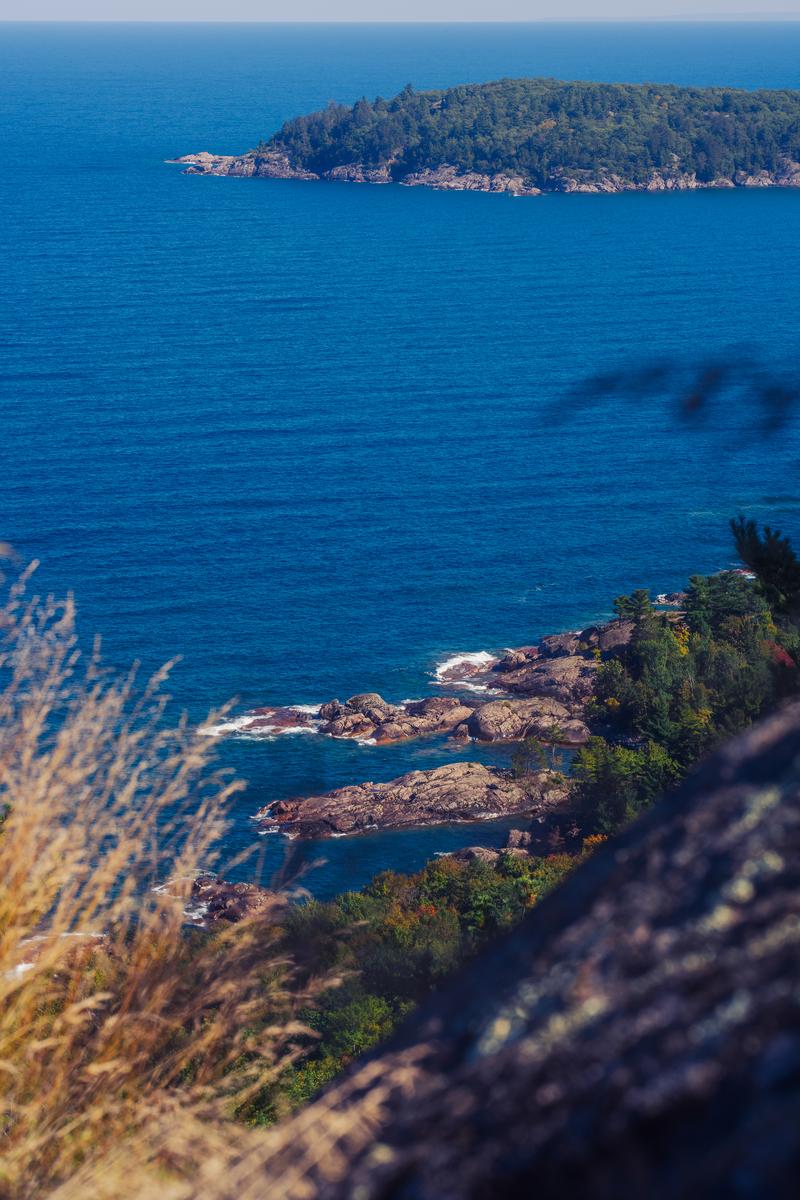
From the Photographer
Sugarloaf Mountain View
Sweeping view from Sugarloaf Mountain
Zeefeldt Photography
— Fine art prints starting at $95
Best for: Hikers and travelers who want serious capability in the lightest possible package.
Price: ~$1,199 body only
6. Sony a7C II — Best Budget Full-Frame Option
If you can stretch your budget, the Sony a7C II brings full-frame dynamic range and resolution in a compact body. The 33MP sensor delivers roughly 15 stops of dynamic range, which is noticeably better than APS-C for recovering highlights and shadows in high-contrast landscape scenes.
Key specs: 33MP full-frame sensor, ISO 100-51200, 5-axis IBIS (7 stops), 10fps burst, 4K 60p video, 3.0″ vari-angle touchscreen, 530 shots per charge, 18.7 oz.
Pros: Full-frame image quality in a compact body, incredible dynamic range, excellent battery life, access to Sony’s vast full-frame FE lens ecosystem, creative looks via Creative Look profiles.
Cons: More expensive than APS-C options, full-frame lenses add weight and cost, single card slot, autofocus joystick is small.
Best for: Beginners who want to invest once in a system they won’t outgrow — and who prioritize image quality above all else.
Price: ~$2,098 body only
Comparison Table
| Camera | Sensor | MP | IBIS | Weather Sealed | Weight | Price |
|---|---|---|---|---|---|---|
| Sony a6700 | APS-C | 26 | Yes | Yes | 17.0 oz | $1,398 |
| Nikon Z50 II | APS-C | 20.9 | No | No | 14.6 oz | $1,097 |
| Fujifilm X-T50 | APS-C | 40.2 | Yes | No | 14.6 oz | $1,399 |
| Canon EOS R50 | APS-C | 24.2 | No | No | 13.1 oz | $679 |
| OM System OM-5 | MFT | 20 | Yes | Yes | 14.5 oz | $1,199 |
| Sony a7C II | Full-Frame | 33 | Yes | Yes | 18.7 oz | $2,098 |
Buyer’s Guide: What to Look for in a Beginner Landscape Camera
Dynamic Range Is King
Landscape photography often involves extreme contrast — bright skies against dark foreground. A camera with wide dynamic range lets you capture detail in both without resorting to HDR bracketing. Look for at least 13 stops of dynamic range at base ISO.
Resolution for Printing
If you plan to sell or display prints (like I do), resolution matters. 20MP is fine for prints up to 20×30″, but 26-40MP gives you cropping flexibility and large print capability without interpolation.
Weather Sealing
You’ll be shooting in rain, mist, blowing sand, and freezing temperatures. Weather sealing isn’t a luxury — it’s insurance for your investment. Not all cameras marketed as “weather-resistant” offer the same protection; check the IP rating if available.
IBIS (In-Body Image Stabilization)
For landscapes on a tripod, IBIS doesn’t matter. But for handheld shooting during golden hour when light drops, 5+ stops of stabilization means the difference between a sharp shot at 1/15s and a blurry one.
Lens Ecosystem
The camera body is just the beginning. Wide-angle lenses (16-35mm equivalent) are the workhorses of landscape photography. Make sure your chosen system has affordable, high-quality wide-angle options. Sony E-mount and Canon RF-S currently have the widest beginner-friendly selections.
Frequently Asked Questions
What is the best mirrorless camera for landscape photography for beginners?
The Sony a6700 offers the best combination of dynamic range, autofocus, and lens selection for beginners. If budget is the primary concern, the Canon EOS R50 at $679 is an excellent entry point.
Is mirrorless better than DSLR for landscape photography?
For most shooters in 2026, yes. Mirrorless cameras offer real-time exposure preview, focus peaking for manual focus accuracy, lighter weight, and electronic shutters that eliminate mirror vibration — all advantages for landscape work.
Do I need a full-frame camera for landscape photography?
No. Modern APS-C sensors like the Sony a6700’s deliver excellent dynamic range and resolution. Full-frame provides an advantage in extreme low-light and maximum print size, but APS-C is more than capable for most landscape work.
What lens should I buy first for landscape photography?
A wide-angle zoom in the 16-35mm equivalent range is the essential first landscape lens. Options like the Sony 10-18mm f/4 (APS-C), Nikon Z DX 12-28mm f/3.5-5.6, or Canon RF-S 10-18mm f/4.5-6.3 are great affordable starting points.
How many megapixels do I need for landscape photography?
20MP is sufficient for prints up to about 20×30 inches. If you want to crop heavily or print very large (30×40 inches and above), look for 30MP or higher. The Fujifilm X-T50’s 40.2MP sensor gives exceptional cropping latitude.
Is weather sealing important for a landscape camera?
Very. Landscape photography means being outdoors in unpredictable conditions — fog, rain, dust, cold. The Sony a6700 and OM System OM-5 both offer weather sealing, which provides significant peace of mind in the field.
Final Verdict
For most beginners entering landscape photography, the Sony a6700 hits the sweet spot — excellent dynamic range, superb autofocus, compact form factor, and the massive Sony E-mount lens ecosystem. It’s a camera you won’t outgrow quickly.
On a tighter budget, the Canon EOS R50 at $679 makes landscape photography accessible without compromise on image quality. And if you’re ready to invest in the best possible image quality from day one, the Sony a7C II delivers full-frame performance in a surprisingly compact body.