Nature photography covers a wide range, landscapes, macro insects, birds, wildflowers, waterfalls. The best cameras under $500 for nature work need to handle that versatility: decent macro capability, enough autofocus for moving subjects, and dynamic range for high-contrast outdoor scenes. Here’s what I’d recommend based on real field use.
Top 3 Picks
- Best Versatile Option: Sony a6400. Best AF in class, superb for wildlife and macro
- Best All-Rounder: Canon EOS R50. Compact, reliable AF, RF lens ecosystem
- Best Compact: Ricoh GR IIIx. 40mm equivalent, razor-sharp for macro and detail shots
1. Sony a6400. Best for Wildlife and Macro
For nature photography specifically, the Sony a6400 hits an exceptional combination of capabilities. The real-time animal eye-tracking autofocus handles birds, mammals, and insects in motion. The APS-C sensor with 1.5x crop gives effective reach with telephoto lenses. And with a macro lens in the E-mount ecosystem (the Sony FE 90mm Macro f/2.8 G is outstanding), the a6400 delivers professional-level insect and flower shots. The 24.2MP sensor resolves fine detail, critical for feather texture, insect wing patterns, and wildflower close-ups.
Key specs: 24.2MP APS-C | Real-time eye-AF | 11fps | E-mount ecosystem | 403g
2. Canon EOS R50. Best Compact Mirrorless for Nature
The Canon EOS R50’s small size is a real advantage for nature photography, you’re less intrusive to wildlife, easier to carry on long hikes, and faster to react when something appears. The Dual Pixel AF II tracks subjects reliably. The RF mount ecosystem has good macro and wildlife telephoto options, and with the EF adapter, the entire Canon DSLR lens library opens up including classic L-series glass at used prices. The 24.2MP sensor handles high-contrast forest scenes well.
Key specs: 24.2MP APS-C | Dual Pixel CMOS AF II | 15fps electronic | RF mount | 210g body
From the Photographer
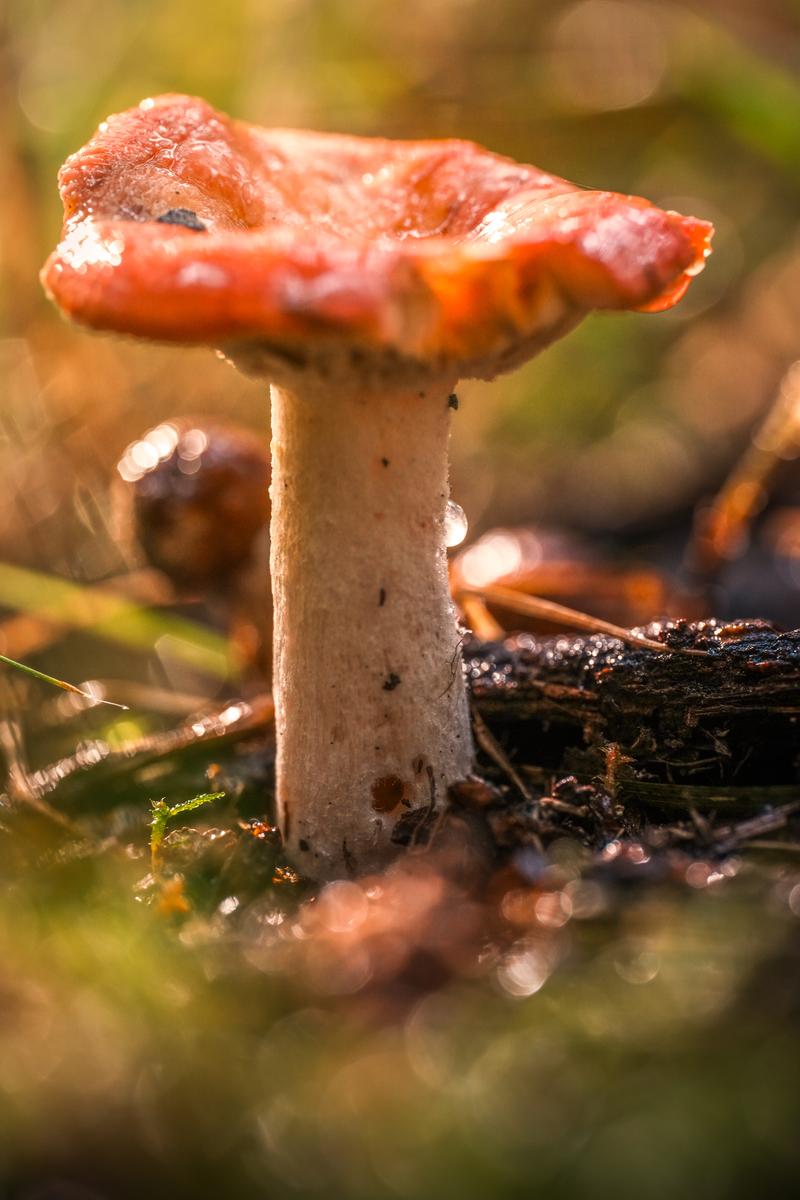
Orange Mushroom Macro
Tiny orange mushroom on the forest floor, a world in miniature
Zeefeldt Photography. Fine art prints starting at $95
3. Ricoh GR IIIx. Best Compact for Macro and Detail
The Ricoh GR IIIx is a unique recommendation, it’s a fixed-lens compact with a 40mm equivalent f/2.8 lens that’s razor-sharp from center to edge. For nature photographers focused on macro details, botanical close-ups, and environmental portraits of subjects (insects on flowers, mushrooms, bark texture), the GR IIIx’s close-focus capability and 24MP APS-C sensor deliver files that rivals expensive DSLR macro setups. It’s the camera I take when I’m hiking and don’t want to carry a full kit. Not ideal for birds or wildlife action, this is a considered, deliberate shooting tool.
Key specs: 24MP APS-C | Fixed 40mm f/2.8 | Macro mode | 6cm min focus | 258g
What to Look For
For general nature photography, prioritize: autofocus accuracy for moving subjects (birds, insects), dynamic range for high-contrast forest and sky scenes, and the lens ecosystem available for your mount. A camera with a limited lens selection will hold you back more than sensor differences. Sony E-mount, Canon RF, and Fujifilm X-mount all have excellent macro and wildlife telephoto options that expand your nature photography capabilities significantly.
Frequently Asked Questions
What’s the best camera system for nature photography?
Sony’s E-mount system has the broadest range of lenses for nature photography across all price points, from affordable E-mount options to professional G Master glass. Canon RF and Fujifilm X-mount are both excellent systems with strong macro and wildlife telephoto options. The key is commitment to one system so you can build a lens library over time.
Do I need a telephoto lens for nature photography?
For wildlife and birds, yes, a telephoto of at least 300mm (equivalent) is essentially required. For botanical macro photography, a dedicated macro lens in the 60-100mm range is more useful than raw telephoto reach. Most nature photographers end up with both: a wide angle for landscapes, a macro for close-ups, and a telephoto for wildlife.
Frequently Asked Questions
What is the best camera for nature photography under $500?
The best camera for nature photography under $500 depends on your specific needs, but key factors include sensor size, autofocus performance, weather sealing, and battery life. Our top picks balance image quality with value, making them ideal for photographers at every level.
Do I need a full-frame camera for nature photography?
Not necessarily. APS-C and Micro Four Thirds cameras offer excellent image quality for nature photography at a lower cost. Full-frame sensors provide better low-light performance and shallower depth of field, but modern crop-sensor cameras can produce stunning results.
What features should I look for when buying a camera for photography?
Look for a camera with a large sensor (APS-C or full-frame), reliable autofocus, at least 24MP resolution, weather sealing if shooting outdoors, good battery life, and compatibility with the lenses you plan to use.