Wildlife photography has specific tripod demands that landscape shooting doesn’t: you need to set up fast (animals don’t wait), carry it far, and handle a heavy telephoto lens without vibration. I’ve used tripods at every price point in the field for bird photography and mammal work, here’s what actually holds up.
Top 3 Picks
- Best Overall: Manfrotto Befree Advanced. Fast lever locks, excellent stability-to-weight ratio
- Best Premium Carbon: Peak Design Travel Tripod. Most innovative design, compact when folded
- Best Value: Neewer 78-inch Carbon Fiber Video Tripod. Heavy-duty, fluid head, excellent for long telephoto
1. Manfrotto Befree Advanced. Best Field Tripod for Wildlife
Manfrotto’s Befree Advanced is the tripod I’d take on any wildlife outing where I’m carrying a telephoto lens of 300-600mm. The lever-lock leg mechanism deploys in seconds, critical when a bird lands in a good position and you have 10 seconds to react. The 4-section carbon fiber legs fold compact enough for a backpack while extending to 59″ working height. The maximum load rating (10kg) handles mirrorless bodies with heavy glass without issue. The ball head is precise and the Arca-Swiss quick-release plate system is universal. Build quality is professional-grade, this tripod takes real field use without complaint.
Key specs: Carbon fiber | 59″ max height | 10kg load | Lever locks | 1.25kg | Arca-Swiss plate
2. Peak Design Travel Tripod Carbon. Most Innovative Design
Peak Design’s Travel Tripod is genuinely different, the legs fold inward around the center column, creating the most compact folded footprint of any full-height carbon fiber tripod. When you’re carrying a camera backpack into the field, the difference between a tripod that fits inside vs. one that hangs off the outside matters. Deployed, it’s a stable, 60″ tripod with a 20kg load capacity (far more than you’ll need). The integrated ball head with Arca-Swiss plate is excellent. It’s expensive, but for wildlife photographers who also hike, it solves the “I don’t want to carry a tripod” problem better than anything else.
Key specs: Carbon fiber | 60″ max height | 20kg load | Folds to 39cm | Integrated ball head | 1.27kg
From the Photographer
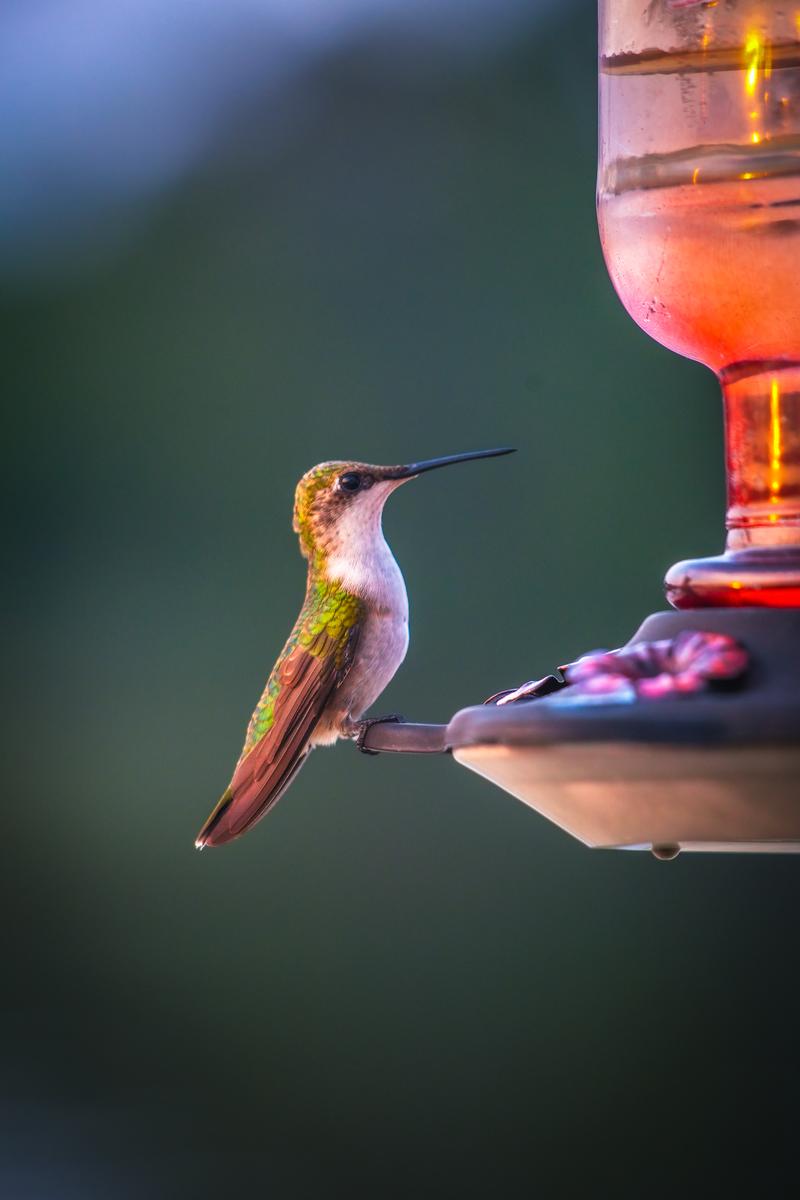
Hummingbird Perched Iridescent Green
An iridescent green hummingbird paused between flights
Zeefeldt Photography. Fine art prints starting at $95
3. Neewer 78-inch Carbon Fiber Video Tripod. Best for Heavy Telephoto
For wildlife photographers using heavy telephoto lenses (500mm+ or supertelephoto zooms), the Neewer 78″ carbon fiber tripod with fluid head is exceptional value. The fluid drag system provides smooth panning for birds in flight and moving mammals, much better for tracking subjects than a standard ball head. The 78″ maximum height means you can shoot from eye level when standing, which reduces muscle fatigue during long telephoto sessions. The carbon fiber construction keeps weight reasonable. One-step quick release makes setup and breakdown fast. Best for photographers who set up at a specific location rather than walking with the tripod extended.
Key specs: Carbon fiber | 78″ max height | Fluid head | 8kg load | 2.1kg | Quick release
Buyer’s Guide for Wildlife Tripods
For wildlife photography, prioritize: deployment speed (twist locks vs. lever locks, lever locks are faster), maximum load capacity (at least 8kg if you’re using 500mm+ lenses), stability at full extension, and the head type. A good ball head handles most wildlife work; a fluid head is better for panning birds in flight. Carbon fiber is worth the extra cost over aluminum for field use, the weight savings matter significantly on long hikes, and the vibration damping is better.
Frequently Asked Questions
Do I need a gimbal head for wildlife photography?
A gimbal head (like the Wimberley WH-200) is the optimal choice for heavy supertelephoto lenses (500mm f/4, 600mm f/4, 800mm f/5.6) because it balances the lens perfectly for frictionless tracking. For smaller lenses (up to 400mm f/5.6 or 100-500mm zooms), a quality ball head works well. If you regularly shoot birds in flight with glass heavier than 2kg, a gimbal is worth the investment.
How tall should a tripod be for wildlife photography?
The tripod should reach eye level without extending the center column, center column extension introduces vibration. For most photographers, this means a minimum extended height of 58-65″. Shorter tripods require you to hunch over, which causes fatigue during long sessions. The tripods above all meet this requirement.
Frequently Asked Questions
What should I look for in the best tripod for wildlife photography?
For for wildlife photography, prioritize stability, weight, and maximum load capacity. Look for carbon fiber construction for lightweight strength, ball heads with Arca-Swiss compatibility, and a minimum height that lets you shoot at ground level. Weather resistance is a bonus.
How much weight can a photography tripod hold?
Most photography tripods have a rated load capacity of 10–30 lbs (4.5–13.5 kg), though This guide recommends staying at 70% of the rated maximum for stability. A standard mirrorless camera with a telephoto lens weighs 3–6 lbs, so even a mid-range tripod is sufficient.
Is a carbon fiber tripod worth the extra cost?
Carbon fiber tripods are worth the investment if you hike or travel frequently. They weigh 30–40% less than aluminum equivalents while offering superior vibration dampening. For studio use, aluminum tripods offer better value.
Browse more nature photography tutorials, gear reviews, and field tips.
Download our guide: exposure, ISO, and aperture strategies for every light condition and terrain.
We respect your inbox. One guide, occasional tips, unsubscribe anytime.