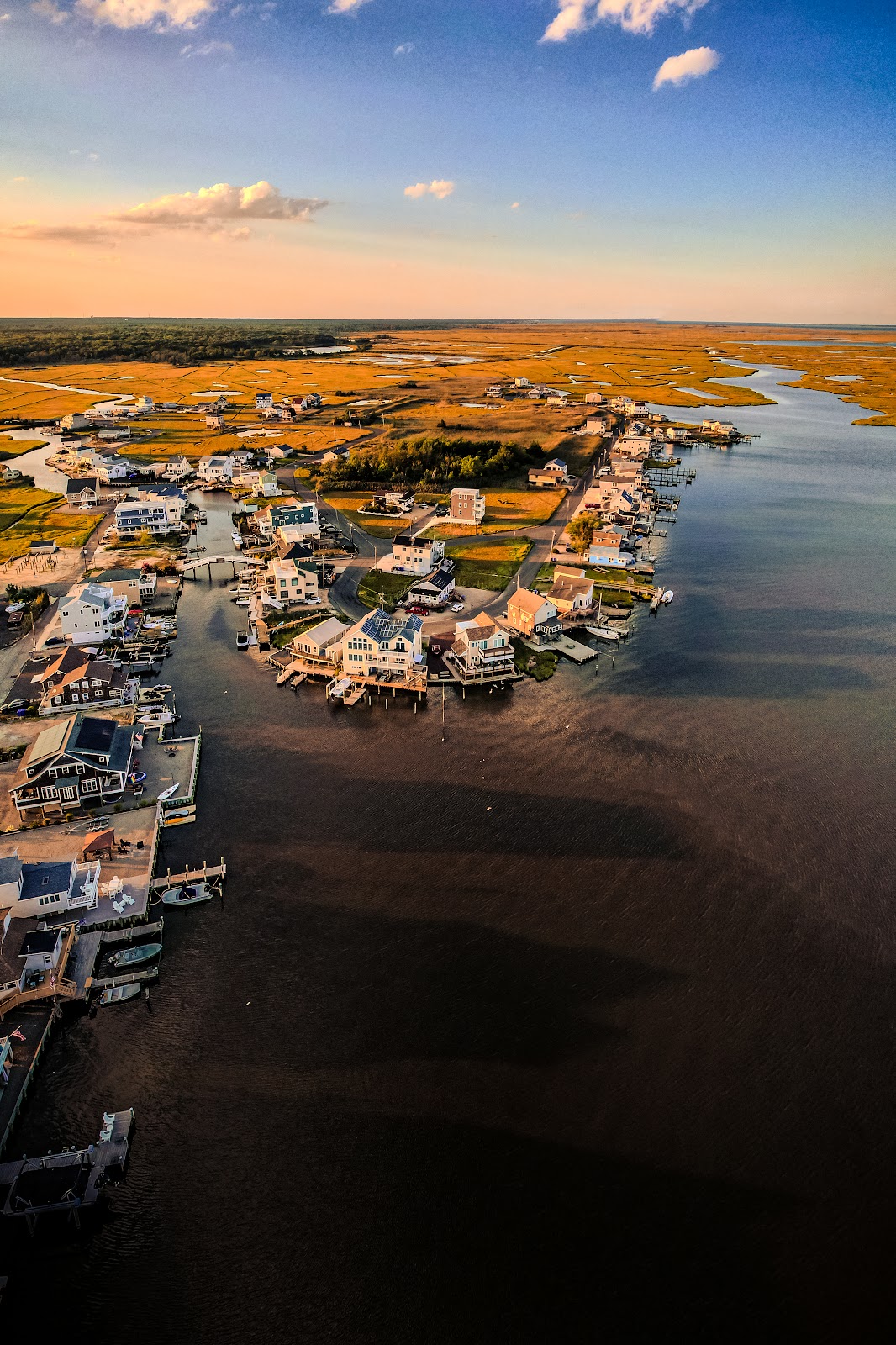
The hardest light in landscape photography is the last ten minutes of it. Amber-lit cliffs above water still in deep shade can span five stops or more, and that single scene decides whether a camera is adequate for serious landscape work. Dynamic range is what holds it together: enough of it and the shadows open cleanly in post, too little and they break into noise and colour blotching. That is why sensor differences at this level are real rather than theoretical.
This guide ranks the best cameras for landscape photography in 2026. Recommendations are based on published sensor measurements and manufacturer specifications, weighted toward what landscape work actually demands: dynamic range at base ISO, resolution that survives large prints, and weather resistance.
Full-Frame vs Crop Sensor for Landscape Photography: The Real Answer
Skip the hedging: full-frame wins for landscape photography, with one meaningful exception. Here’s why – and when the exception matters.
Landscape photography puts sensors through their hardest test. You’re capturing high-contrast scenes, printing large, and examining files at 100% for critical sharpness across the frame. Full-frame sensors have larger individual photosites, which translates to better dynamic range (typically 1–2 additional stops of recoverable shadow detail), lower read noise at base ISO, and a cleaner tonality in gradients like skies and water reflections.
The exception: the Fujifilm X-T5. Its 40MP APS-C sensor defies the usual crop sensor limitations. If you’re shooting mostly in good light, hiking long distances, and printing at 20×30 or smaller, it’s a legitimate landscape tool. For everything else – especially dramatic light, sunrise/sunset work, and large fine art prints – full-frame is the right call.
Best Cameras for Landscape Photography (2026)
1. Sony A7R V (61MP) – Best Overall for Landscape Photography
The verdict: This is the landscape camera. 61 megapixels gives you the resolution to crop hard and still make a 30×40 print. Sony’s sensor engineering means you’re getting 15+ stops of dynamic range – enough that backlit rock formations shot with the sun directly behind them retain shadow detail that would be unrecoverable on lower dynamic-range sensors at this price point. The A7R V also added a substantial AI-based subject detection system, which handles focus stacking scenarios well and manages focus across complex foreground-to-background compositions.
The physical pixel shift multi-shot mode produces 240MP output for ultimate resolution when conditions allow. Practically speaking: if you ever shoot from a tripod in still-air conditions – which is most landscape work – you can produce files that no medium format camera at twice the price can match for subject detail.
Real-world handling: The A7R V is not light (723g body), and 61MP files are large – plan on fast CFexpress Type A cards and a workflow that can handle 80–120MB raw files. Battery life is adequate for a full day of shooting if you use the viewfinder sparingly. The flip-out screen is excellent for shooting from low angles, which suits foreground-led compositions.
Who should choose it: Anyone serious about large-format printing, selling prints, or commercial landscape work. The resolution ceiling is meaningfully higher than every other option here.
2. Nikon Z8 (45MP) – Best Dynamic Range for Landscape
Nikon’s BSI stacked sensor in the Z8 produces among the strongest shadow recovery available in a non-Sony body. At base ISO, the files hold together beautifully when you push shadows 4–5 stops in post – a common requirement when shooting the first 15 minutes after sunrise, when the sky is bright and the land is still in deep blue shadow. The Z8 also offers 45MP, which is more than enough resolution for any landscape print application up to very large format.
The Z8 has a significant ergonomic advantage over the Sony A7R V: it handles more like a pro body, with deeper grip, more physical controls, and a dual card slot arrangement (CFexpress Type B + SD) that’s more flexible than Sony’s twin CFexpress Type A setup. If you’ve used Nikon DSLRs, the transition to Z8 is intuitive.
Important consideration: The Z8’s 45MP files handle dynamic range superbly, but if resolution is your primary landscape priority – for printing at 40×60 or larger – the A7R V’s extra 16MP matters. For everything up to 30×40, the Z8 is genuinely excellent and its dynamic range performance at base ISO is class-leading.
3. Canon EOS R5 Mark II (45MP) – Best Canon for Landscape
Canon has historically lagged Sony and Nikon in sensor dynamic range, and that was a legitimate concern for landscape photographers. The R5 Mark II closes that gap significantly. It’s now a genuinely competitive landscape camera, not a compromise. The 45MP sensor produces beautiful color – Canon’s color science has always been strong – and the improved shadow recovery means you can shoot in the same demanding conditions without being disadvantaged.
Where Canon wins: if you’re a hybrid shooter, the R5 II’s video capability is well beyond the Sony A7R V for high-quality 8K RAW recording. If you already shoot Canon RF glass, staying in-system makes more sense than the overhead of switching to Sony or Nikon. The RF lens lineup has matured into an excellent landscape roster, with the RF 15–35mm f/2.8 and RF 14–35mm f/4 both being outstanding.
The honest comparison: In a direct dynamic range shootout at base ISO, the A7R V and Z8 still pull slightly more shadow detail than the R5 II. In good light, the difference is invisible. In extreme contrast situations – shooting into the sun, or capturing a scene with a 6+ stop range – you’ll notice it if you’re printing large and examining carefully.
4. Sony A7 IV (33MP) – Best Value Full-Frame for Landscape
The A7 IV is where the Sony full-frame system becomes accessible. At roughly $2,500 body-only (often found for less), you’re getting a 33MP BSI sensor with Sony’s excellent dynamic range characteristics, IBIS that’s genuinely useful for tripod-free shooting in good light, and the full Sony E-mount ecosystem. The step-down from the A7R V is real – 33MP vs. 61MP means you lose significant cropping flexibility and large-format print headroom – but for anyone printing to 24×36 or smaller, the A7 IV delivers results that are hard to fault.
The A7 IV works well as a lighter second body for travel landscapes. Image quality at low ISO is excellent. The gap against the A7R V shows in very low light and twilight blue-hour work, where the lower pixel density produces slightly more noise under heavy processing.
5. Fujifilm X-T5 (40MP APS-C) – Best Compact Option
The X-T5 is an anomaly: an APS-C camera that legitimately competes with full-frame for landscape work in good light. 40MP on a smaller sensor means Fujifilm is packing photosites in tight – which means you need good light and low ISO to get the most from it. At ISO 160–400 with quality Fujifilm glass (the XF 10–24mm, XF 16–80mm, or XF 23mm f/1.4), the files are stunningly detailed and the Velvia film simulation produces a warm, saturated rendering that many landscape photographers love for its aesthetic.
The practical case for the X-T5: it’s the lightest high-resolution option by a meaningful margin. An A7R V kit with a midrange zoom runs over 2kg. A comparable X-T5 kit is under 1.2kg. Across a full day on the trail, that difference is felt in your shoulders. If you’re making prints no larger than 24×30 and regularly carry gear on long hikes, the X-T5 earns a serious look.
Essential Landscape Photography Lens Choices
A camera without the right glass is limited. For Sony shooters, the Sony FE 16–35mm f/2.8 GM II is one of the finest wide-angle zooms available for the system – sharp corner-to-corner wide open, reasonably compact, and excellent for dawn compositions where you need the light-gathering of f/2.8 combined with landscape-worthy sharpness. The Sony FE 14mm f/1.8 GM is a specialist prime for astrophotography and ultra-wide landscape work where the widest possible perspective matters more than zoom flexibility. For Nikon users, the Nikon Z 14–30mm f/4 S is an outstanding compact wide-angle that accepts front filters – valuable for the graduated ND work that landscape photographers rely on.
One consistent field recommendation: don’t skimp on glass to buy a better body. An A7 IV with a Sony 16–35mm GM II will outperform an A7R V with a mediocre kit zoom. The lens shapes the image; the body captures it.
Landscape Photography Settings: Getting the Most From Any Camera
Base ISO and Exposing to the Right
Always shoot at your camera’s base ISO for landscape work – typically ISO 100 or 64. Expose to the right (ETTR): push your exposure as bright as you can without blowing highlights in the histogram. This preserves maximum shadow data and minimizes noise when you pull back exposure in post. On a tripod with a scene that has moving elements (water, grass), bracket exposures and blend in post rather than trying to capture everything in one frame.
Aperture Selection
f/8 to f/11 hits the sharpness sweet spot for most landscape lenses. Stopping down to f/16 or f/22 introduces diffraction softness that costs you the sharpness your expensive sensor deserves. Use hyperfocal distance calculations (PhotoPills app makes this simple) instead of stopping down hard to achieve front-to-back sharpness. On a 35mm equivalent at f/8, you typically have a sharp zone from about 4 feet to infinity – more than enough for most landscape compositions.
Hyperfocal Distance
Set your focus at the hyperfocal distance, not at infinity. On a 24mm lens at f/8 on full-frame, hyperfocal distance is approximately 4 meters. Focus at 4 meters and you’re sharp from 2 meters to infinity. Focus at infinity and you’re throwing away foreground sharpness unnecessarily. Every serious landscape photographer uses this technique.
Tripod Use for Landscape Photography
No camera recommendation for landscape photography is complete without this: if you’re not on a tripod for the majority of your landscape shots, you’re limiting yourself regardless of what camera you choose. The dynamic range and resolution advantages of the cameras above are realized on a tripod at base ISO – handheld at high ISO cancels out much of the sensor advantage.
Carbon fiber tripods weigh significantly less than aluminum over a full day of hiking. The extra cost (typically $150–300 more for comparable carbon fiber) is worth it if you’re covering any meaningful distance on foot. A ballhead from RRS or Arca-Swiss gives you fine adjustment control that cheap pan-tilt heads don’t. Budget around $400–600 total for a quality tripod and head that will outlast multiple camera bodies.
Frequently Asked Questions
Is 61MP overkill for landscape photography?
Not if you print large. A 61MP file gives you enough resolution for a 40×60 print at 200 PPI – the kind of print that goes on a gallery wall. If you’re shooting for Instagram or printing at 8×10, then yes, 33MP from the A7 IV is more than sufficient. The resolution question is really a printing question.
Can I get great landscape shots with a crop sensor camera?
Yes – the Fujifilm X-T5 proves it. The limitation is dynamic range in extreme contrast conditions and file size for very large prints. In good light, a 40MP APS-C sensor produces results that are difficult to distinguish from full-frame at normal print sizes.
Do I need weather sealing for landscape photography?
Weather sealing is worth having, not essential. Bodies like the Sony A7R V handle light rain without issue. What matters more is protecting your lens front element and carrying a rain cover for your bag. That said, if you regularly shoot in coastal environments, morning dew, or Pacific Northwest rain, weather sealing on both body and lens provides real-world peace of mind.
What’s the best camera for landscape photography under $1,500?
The Sony A6700 or Fujifilm X-T5 for APS-C. For a used full-frame body at this price point, look for a used Sony A7 III or Nikon Z5 II – both capable landscape cameras when paired with good glass.
Is in-body image stabilization useful for landscape photography?
Marginally, on a tripod. IBIS on a tripod can actually introduce micro-vibrations if not properly disabled. Most cameras have a tripod detection mode that handles this. Where IBIS genuinely helps landscape photographers: handheld golden-hour shooting, travel snapshots, and video. Don’t choose a camera primarily for its IBIS for landscape work on a tripod.
Browse more nature photography tutorials, gear reviews, and field tips.
Download our guide: exposure, ISO, and aperture strategies for every light condition and terrain.
We respect your inbox. One guide, occasional tips, unsubscribe anytime.
Related Guides
 How to Photograph the Milky Way: Settings, Planning & Post-Processing
 Mastering Long Exposure Photography: A Complete Guide to Silky Water & Dramatic Skies
 How to Photograph Waterfalls: Getting Silky Smooth Water with the Right Settings
 How to Photograph in Fog: Camera Settings and Techniques for Misty Landscapes