
Your first landscape camera doesn’t need to cost $2,000. In fact, spending too much on a body when you’re starting out is one of the most common mistakes I see, the money is almost always better spent on a good lens and a sturdy tripod. The best affordable camera for landscape photography for beginners is one that teaches you the fundamentals while producing images good enough to print and share proudly. After years of shooting landscapes across Michigan and mentoring new photographers, here are my seven picks.
Quick Picks: Top 3 for Beginners
| Camera | Price | Why It’s Best for Beginners |
|---|---|---|
| Canon EOS R50 Mark II | ~$800 | Easiest to learn, most portable |
| Nikon Z50 II | ~$1,050 | Best all-around beginner landscape camera |
| Canon EOS R10 | ~$750 | Best value, leaves budget for lenses |
What Makes a Good Beginner Landscape Camera
Beginners need different things than experienced photographers. I evaluated these cameras on: ease of use (clear menus, helpful auto modes, guided settings), image quality at base ISO (landscapes are mostly shot at ISO 100-400), a useful kit lens (so you can start shooting immediately), portability (because beginners rarely have dedicated camera bags yet), and room to grow (a lens ecosystem that supports your development). Every camera here can produce wall-worthy landscape images while teaching you the craft.
The 7 Best Beginner Landscape Photography Cameras
1. Canon EOS R50 Mark II. Easiest to Learn
The R50 Mark II was designed for people stepping up from phone photography, and it shows. Canon’s Creative Assist mode lets you control exposure with visual sliders. “warmer/cooler,” “brighter/darker,” “more/less background blur”, instead of cryptic numbers. The Advanced A+ mode automatically recognizes scenes (sunset, waterfall, close-up) and optimizes settings. For a beginner, this means you start getting good landscape images from day one while gradually learning what the settings actually do.
At just 376g, it’s also the camera you’ll actually carry. The 18-45mm kit lens covers a useful wide-angle to standard range, and Canon’s RF-S 10-18mm f/4.5-6.3 IS STM ($300) is an excellent ultra-wide upgrade for landscapes when you’re ready.
Key specs: 24.2MP APS-C, ISO 100-32,000, vari-angle touchscreen, 4K/30p, Wi-Fi for phone transfer, 376g, 310 shots/charge.
- Pros: Most intuitive interface for beginners, Creative Assist visual controls, ultra-portable, excellent Canon color, vari-angle screen for low angles, Wi-Fi sharing
- Cons: No IBIS, no weather sealing, small battery, limited physical dials for manual control
- Best for: Absolute beginners who want the gentlest learning curve and maximum portability
- Price: ~$800 body only, ~$950 with 18-45mm kit lens
2. Nikon Z50 II. Best All-Around Beginner Landscape Camera
The Z50 II hits a sweet spot for beginners who want to learn seriously but not spend a fortune. The IBIS means your handheld shots are sharper (useful when you don’t have a tripod), the tilting touchscreen makes low-angle compositions easy, and Nikon’s Guide Mode walks you through settings step by step. The 20.9MP sensor has excellent dynamic range, you can recover shadows and tone down highlights in post without the image falling apart, which is forgiving for beginners who haven’t nailed exposure yet.
The Z DX 16-50mm f/3.5-6.3 VR kit lens is small, lightweight, and optically solid for the price. It covers the wide-angle range that landscape photography demands. For a step up, the Nikon Z DX 12-28mm f/3.5-5.6 PZ (~$360) is an ultra-wide option that’ll transform your landscapes.
Key specs: 20.9MP APS-C, ISO 100-51,200, IBIS, tilting touchscreen, Guide Mode, 4K/30p, USB-C, 550g, 350 shots/charge.
- Pros: IBIS for sharper handheld shots, Guide Mode for learning, excellent dynamic range, USB-C charging, good kit lens, solid build
- Cons: 20.9MP is lower resolution, battery life is moderate, smaller EVF, Guide Mode disappears if you switch to full manual
- Best for: Serious beginners who want stabilization and a guided learning experience
- Price: ~$1,050 body only, ~$1,150 with 16-50mm kit lens
3. Canon EOS R10. Best Value (Leaves Budget for Lenses)
At $750 body-only, the R10 is the most affordable serious camera on this list, and it’s anything but entry-level in capability. The same DIGIC X processor and Dual Pixel AF as Canon’s expensive bodies, 15fps burst shooting (handy for catching that fleeting sunset moment), and 24.2MP of resolution that produces detailed, print-ready files. The money you save on the body goes toward glass, and in landscape photography, the lens matters as much as the body.
My recommended beginner landscape kit: R10 ($750) + Canon RF-S 18-150mm f/3.5-6.3 IS STM ($480) = $1,230 for an incredibly versatile all-in-one setup that covers everything from ultra-wide to telephoto landscape compositions.
Key specs: 24.2MP APS-C, ISO 100-32,000, 15fps, Dual Pixel AF II, 4K/30p, vari-angle touchscreen, 429g, 430 shots/charge.
- Pros: Lowest price for a fully capable landscape camera, fast and accurate AF, Canon’s excellent color, lightweight, room in budget for a great lens
- Cons: No IBIS, no weather sealing, smaller buffer, single card slot
- Best for: Value-focused beginners who want to invest more in lenses than in a body
- Price: ~$750 body only
4. Fujifilm X-T30 II. Best for Learning Exposure
The X-T30 II has physical dials for shutter speed, exposure compensation, and ISO (via command dial). These tangible controls teach you the exposure triangle faster than any other camera because you can see and feel the relationship between settings. Turn the shutter speed dial from 1/125 to 1/30 and watch the exposure change in real time, it makes the learning process physical and intuitive.
Fuji’s film simulation modes (Velvia for saturated landscapes, Classic Chrome for muted tones, Astia for soft portraits) produce gorgeous JPEGs without any post-processing, great for beginners who haven’t learned editing yet. The 26.1MP sensor delivers excellent detail and the compact body is easy to carry.
Key specs: 26.1MP APS-C X-Trans CMOS 4, ISO 160-12,800, physical shutter speed dial, 3.0″ tilting touchscreen, 4K/30p, 383g, 390 shots/charge.
- Pros: Physical dials teach exposure fundamentals, beautiful out-of-camera JPEGs via film simulations, 26MP sensor, compact and lightweight, retro design
- Cons: No IBIS, no weather sealing, older AF system, limited buffer, Fuji X-mount lenses can be pricier
- Best for: Learners who want to understand the craft through hands-on controls, and anyone who loves beautiful straight-out-of-camera color
- Price: ~$900 body only
5. Nikon Z30. Best Budget Entry Point
At $500 body-only, the Z30 is the cheapest way into a serious interchangeable-lens camera system. No EVF (you compose on the rear screen like a phone), no IBIS, it’s stripped to essentials. But the 20.9MP APS-C sensor is proven, the Z-mount gives you a clear upgrade path to more advanced Nikon bodies later, and the image quality at base ISO is excellent for landscapes. Pair it with the Z DX 16-50mm kit ($100-$150 with the body) and you’re shooting landscapes for under $650 total.
Key specs: 20.9MP APS-C, ISO 100-51,200, no EVF, rear screen only, 4K/30p, USB-C, 405g, 330 shots/charge.
- Pros: Most affordable interchangeable-lens camera, excellent image quality at base ISO, Z-mount upgrade path, compact and light, USB-C
- Cons: No EVF (screen only), no IBIS, no weather sealing, rear screen hard to see in bright sunlight
- Best for: Budget beginners who want an upgradeable system at the lowest possible entry price
- Price: ~$500 body only
6. Sony a6100 (Closeout/Used). Best Sony Budget Option
The a6100 has been superseded by newer Sony bodies, which means prices have dropped to $550-$700 used or on closeout. For landscape work at base ISO, which is most landscape work, this camera produces excellent files. The 24.2MP APS-C sensor, real-time autofocus, and Sony’s E-mount compatibility give you access to one of the largest lens ecosystems in photography. The Sigma 16mm f/1.4 and Sony E 10-18mm f/4 are both excellent landscape lenses available for this mount.
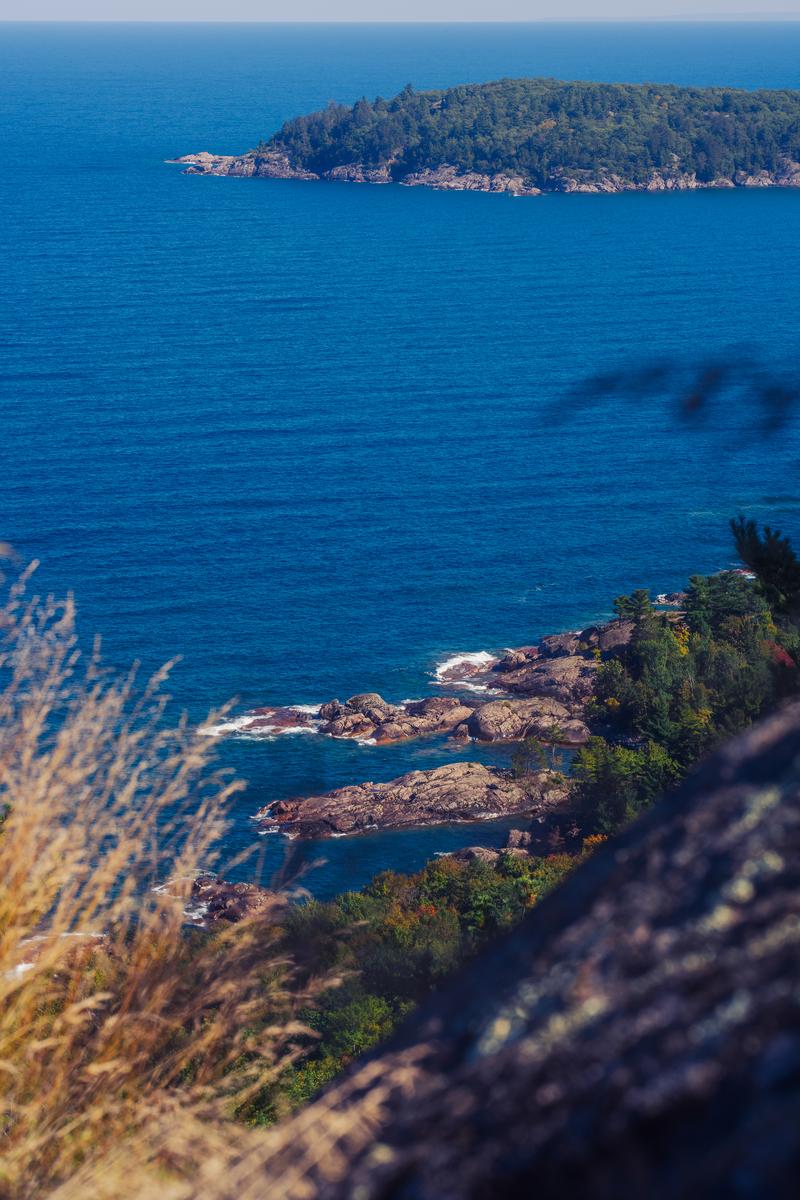
From the Photographer
Sugarloaf Mountain View
Sweeping view from Sugarloaf Mountain
Zeefeldt Photography
. Fine art prints starting at $95
Key specs: 24.2MP APS-C, ISO 100-32,000, real-time AF, 4K/30p, tilting screen, 396g, 420 shots/charge.
- Pros: Excellent price used, proven image quality, enormous E-mount lens selection, compact body, solid AF system
- Cons: No IBIS, older menu system, no weather sealing, micro-USB (not USB-C), discontinued
- Best for: Budget buyers who want Sony’s lens ecosystem at the lowest entry price
- Price: ~$550-$700 used/closeout
7. OM System OM-5. Best for Harsh Conditions
If you’re the type of beginner who wants to shoot in rain, snow, and harsh conditions from day one, the OM-5 removes the worry. IP53 rated, this camera goes where others can’t. The 7-stop IBIS is phenomenal for handheld shooting, the Live Composite mode lets you watch long exposures build in real time (an incredible learning tool), and the High Res Shot mode creates 50MP files from the 20.4MP sensor for maximum landscape detail.
Key specs: 20.4MP Micro Four Thirds, ISO 200-25,600, IP53 rated, 7-stop IBIS, Live Composite, High Res Shot (50MP), 3.0″ vari-angle touchscreen, 414g, 310 shots/charge.
- Pros: Best weather sealing in class, 7-stop IBIS, Live Composite for learning long exposure, High Res Shot for 50MP landscape files, lightweight system
- Cons: Smaller M4/3 sensor, 20.4MP base resolution, $1,200 is pricey for what’s technically a smaller sensor, M4/3 market is niche
- Best for: Beginners who shoot in challenging weather and want computational photography tools for learning
- Price: ~$1,200 body only
Comparison Table
| Camera | Resolution | IBIS | Weather Sealed | Weight | Beginner Features | Price |
|---|---|---|---|---|---|---|
| Canon R50 II | 24.2MP | No | No | 376g | Creative Assist, Auto Scene | $800 |
| Nikon Z50 II | 20.9MP | Yes | Partial | 550g | Guide Mode | $1,050 |
| Canon R10 | 24.2MP | No | No | 429g | Guided UI | $750 |
| Fujifilm X-T30 II | 26.1MP | No | No | 383g | Physical dials, Film Sims | $900 |
| Nikon Z30 | 20.9MP | No | No | 405g | Simple menu | $500 |
| Sony a6100 | 24.2MP | No | No | 396g | Real-time AF | $600 used |
| OM System OM-5 | 20.4MP | Yes (7-stop) | IP53 | 414g | Live Composite, High Res | $1,200 |
Beginner Landscape Photographer’s Buying Guide
Spend More on the Lens
This is the single best advice for beginners: a $750 camera with a $500 lens will produce better landscape images than a $1,200 camera with a $50 lens. The lens determines sharpness, contrast, and flare resistance. Start with the kit lens, learn on it, then invest in a quality wide-angle zoom or prime.
Get a Tripod Early
Landscape photography is tripod photography. Long exposures for silky water, small apertures (f/11-f/16) for front-to-back sharpness, golden hour low light, all demand a stable platform. You don’t need a $500 tripod. A $60-$100 aluminum tripod that’s stable and tall enough for your height will serve you well for years.
Learn to Shoot RAW
RAW files retain much more data than JPEGs, giving you flexibility in post-processing to recover highlights, lift shadows, and adjust white balance. Every camera on this list shoots RAW. Start with JPEG+RAW mode so you have both, the JPEGs for immediate sharing, the RAW files for when you learn editing.
Don’t Obsess Over Specs
At the beginner level, every camera on this list produces images that are far better than what you need. The difference between 20MP and 26MP won’t limit you for years. Focus on learning composition, light, and exposure, those skills matter 10x more than specs.
Frequently Asked Questions
What’s the best first lens for landscape photography?
Start with the kit lens that comes with your camera, it’s designed to be versatile and it’s free (or nearly free) with the body. When you’re ready to upgrade, get a wide-angle zoom: Canon RF-S 10-18mm ($300), Nikon Z DX 12-28mm ($360), or Fuji XF 10-24mm ($800). Wide-angle lenses are the bread and butter of landscape photography.
Should I buy a used camera as a beginner?
Buying used or refurbished from reputable sellers (KEH, MPB, B&H Used, Amazon Renewed) is one of the smartest things a beginner can do. You get more camera for your money, and mirrorless cameras have fewer mechanical parts that wear out compared to DSLRs. Check the shutter count and look for cosmetic damage, but functionally, a well-cared-for used camera shoots identical images to a new one.
Do I need weather sealing for landscape photography?
It’s nice to have but not essential for beginners. A $10 rain cover protects any camera in a downpour. Weather sealing matters more when you’re frequently shooting in rain, snow, or dusty conditions without wanting to think about protecting your gear. Most beginners will be fine without it for their first year or two.
Is a phone good enough for landscape photography?
Modern phones take surprisingly good landscape photos in ideal conditions. However, a dedicated camera surpasses a phone in dynamic range (capturing bright skies and dark shadows simultaneously), raw file flexibility, long exposure capability, and print quality at large sizes. If you’re consistently frustrated by your phone’s limitations, that’s the sign you’re ready for a dedicated camera.
How much should a beginner spend on a landscape photography setup?
A complete beginner setup, camera body, kit lens, memory card, and basic tripod, runs $650-$1,300 depending on the camera you choose. The Nikon Z30 + kit lens + tripod can be under $700. The Canon R10 + 18-150mm + tripod hits about $1,350. Don’t forget memory cards ($15-$30) and a basic camera bag ($30-$50).
Final Verdict
For most beginners, the Canon EOS R50 Mark II is the easiest starting point. Its Creative Assist mode, compact size, and excellent Canon color make it the least intimidating camera here, and it produces great landscape images. At $800 body-only, it also leaves room in the budget for a wide-angle lens when you’re ready.
If you want more features and room to grow, the Nikon Z50 II at $1,050 adds IBIS and Guide Mode, both genuinely helpful for learning landscape photography.
And if budget is your primary concern, the Canon EOS R10 at $750 gives you a fully capable camera with money left for the lens that’ll actually define your image quality.
The best affordable camera for landscape photography for beginners is the one that gets you outside with a camera in your hands. Every camera on this list will produce images you’ll be proud of. Now get out there and shoot.
Related Guides
Browse more nature photography tutorials, gear reviews, and field tips.
Related Guides
 Mastering Long Exposure Photography: A Complete Guide to Silky Water & Dramatic Skies
 Best Tripods for Landscape Photography (2026): 7 Picks From Budget to Pro
 How to Photograph Waterfalls: Getting Silky Smooth Water with the Right Settings
 How to Photograph in Fog: Camera Settings and Techniques for Misty Landscapes