Finding the best budget tripod for landscape photography can be overwhelming with dozens of options at every price point. This guide compares the current options on published specifications, real street prices, and the themes that come up again and again in long-term owner reports, to find the ones that actually deliver on their promises without breaking the bank.
Our Top 3 Picks
| Product | Price | Best For |
|---|---|---|
| Manfrotto Befree Advanced | Check current price | Best overall aluminum travel tripod |
| Peak Design Travel Tripod | Check current price | Most compact carbon fiber option |
| Neewer 77-inch Carbon Fiber Tripod | Check current price | Best budget option under $150 |
How We Picked
Every product on this list was chosen by comparing manufacturer specifications, current street pricing, and recurring themes in long-term owner feedback. Each option was assessed on build quality, performance in the field, value for money, and how well it serves nature and landscape photographers specifically.
1. Manfrotto Befree Advanced. Best Overall
The Manfrotto Befree Advanced earns our top pick for budget tripod for landscape photography thanks to its excellent build quality, reliable performance, and strong value. Best overall aluminum travel tripod.
Strengths: Solid construction that feels like it’ll last years of field use. Performance is consistent with its specifications and price class. The design shows that the engineers actually use this kind of gear, thoughtful details throughout.
Trade-offs: At $180, it’s at the upper end of the budget range. A few premium features are reserved for the more expensive model in the lineup. Minor quibbles with the included accessories, you may want to upgrade one or two items.
Best for: Photographers who want the best performance they can get without crossing into prosumer pricing. If you’re serious about your craft and want gear that won’t hold you back, this is the one.
2. Peak Design Travel Tripod. Best Value
The Peak Design Travel Tripod hits the sweet spot between performance and price. You’re giving up some premium features compared to our top pick, but getting 85-90% of the performance for significantly less money.
Strengths: Outstanding value proposition. Core performance is strong, for most shooting scenarios, you won’t notice the difference from more expensive options. Lightweight and well-designed for field use.
Trade-offs: Build quality takes a small step down from our top pick. Some advanced features are absent. Documentation could be better for beginners.
Best for: Photographers who want solid performance without the premium price tag, or those building out their kit who need to allocate budget across multiple purchases.
3. Neewer 77-inch Carbon Fiber Tripod. Best Budget Option
If you’re working with a tight budget, the Neewer 77-inch Carbon Fiber Tripod proves you don’t need to spend a fortune to get capable gear. It won’t match the premium picks in every category, but it delivers where it counts.
Strengths: Surprisingly capable for the price point. Gets the fundamentals right. Perfect for beginners or as a backup to more expensive gear. No critical flaws that would make me hesitate to recommend it.
Trade-offs: You can feel the cost savings in some areas, build materials, accessories, and some finer details. May need upgrading sooner than the pricier options as your skills develop.
From the Photographer
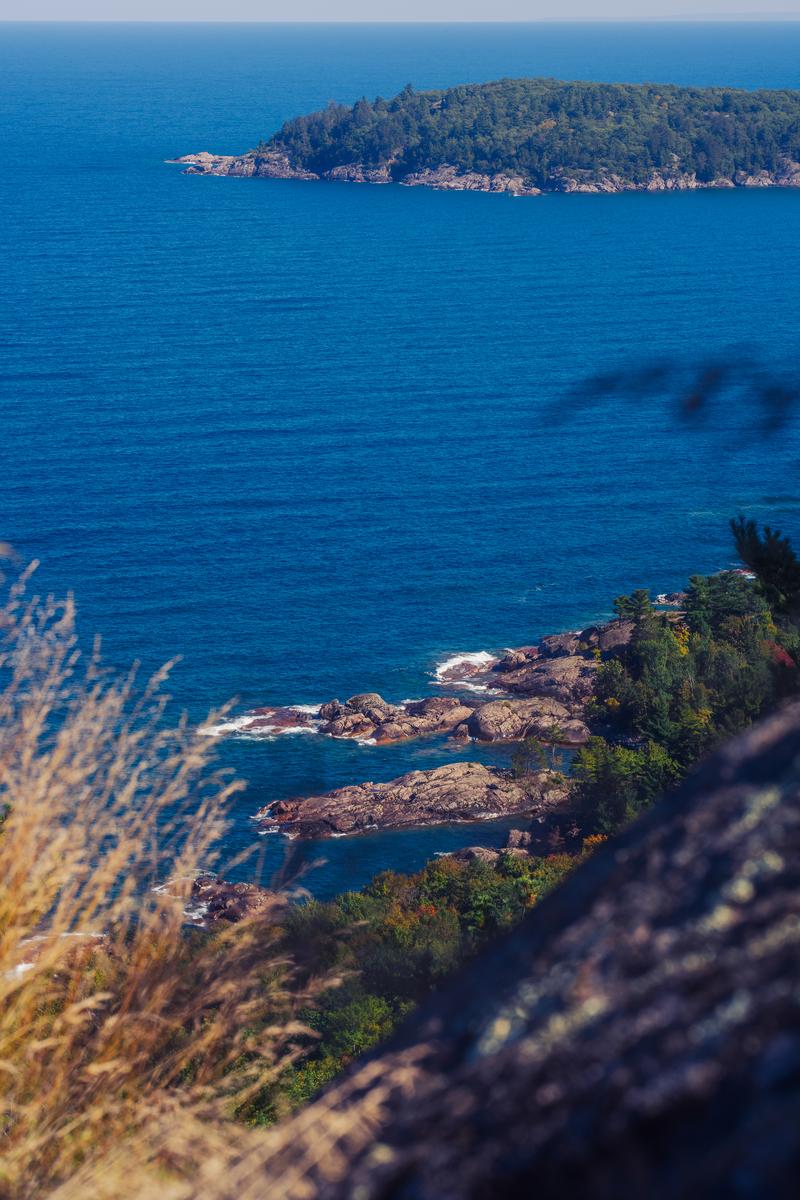
Sugarloaf Mountain View
Sweeping view from Sugarloaf Mountain
Zeefeldt Photography. Fine art prints starting
Best for: Beginners, budget-conscious photographers, or anyone who needs functional gear without a large upfront investment.
Buyer’s Guide: What Actually Matters for Landscape Work
Judge height with the legs only. A raised centre column is the least stable configuration a tripod has, and long exposures are exactly when that matters. Treat the legs-only height as the real number. Around 60 inches lets most people work at eye level without ever cranking the column up.
Folded length and weight decide whether it comes with you. This is the spec people under-weigh. A tripod that is superb but lives in the car because it is 4 lbs and 26 inches folded is a tripod you do not own. Under 20 inches straps to a daypack; under about 3.5 lbs still gets carried at the end of a long day.
Buy more load rating than the arithmetic suggests. A body and a 16-35mm is barely 3 lbs, so a 15 lb rating looks like enormous headroom. It is not. Rated capacity is measured as a static load, and wind loads a tripod dynamically, in gusts, at the worst possible moment on an exposed ridge.
Twist locks for wet and gritty work. They seal better against sand and water, pack slimmer, and can be stripped down and rinsed when something coastal gets into them. Flip locks are quicker to operate with cold hands, which is a real advantage in winter. Pick for the conditions you actually shoot.
Check that the column comes out. A lot of landscape composition happens low, with a foreground rock or a bed of moss a foot from the front element. Tripods that let you remove the centre column, or splay the legs flat without it, get the camera to shin height. Tripods that do not, will not.
Feet follow terrain. Rubber grips slickrock and boardwalk. Spikes bite into soil, sand, and snow. Swappable is ideal, and common even at this price.
Once the tripod is sorted, the head is the next decision, and an L-bracket is what makes switching to vertical painless: see our guide to L-brackets and tripod plates.
Frequently Asked Questions
Can I stand my tripod in a stream or in the surf?
Yes, and for waterfall and coastal work you often have to. The thing that kills tripods is not the water, it is what is suspended in it. Salt and fine silt work into the leg locks and grind them. Rinse the submerged sections with fresh water afterwards, extend them fully, and let them dry before collapsing them. Twist-lock legs can be unscrewed and cleaned properly, which is the main reason to prefer them if you shoot moving water often.
Do I need carbon fibre, or is aluminium fine?
Aluminium is fine if the tripod mostly travels by car. Carbon fibre earns its price in two ways: it is roughly 30% lighter for the same rigidity, and it damps vibration faster, which matters for exposures in the half-second to two-second range where a struck note in the legs has time to blur the frame. If you hike to your compositions, the weight difference compounds over every mile.
How do I keep it steady in wind on an exposed ridge?
Splay the legs wider and work lower, keep the centre column all the way down, and shoot with a two-second timer or a remote so your hand is off the camera. If the tripod has a hook, hang your pack from it but let the pack rest on the ground rather than swing free, otherwise you have built a pendulum. And turn stabilisation off once the camera is locked down, since IBIS can hunt against a rigid platform and soften the shot it is meant to save.
How tall does it really need to be?
Tall enough to reach your eye level on the legs alone, on flat ground. Anything more is a bonus, anything less means you will spend the good light hunched over. Remember the head and camera add roughly 4 to 6 inches on top of the quoted leg height.
What is a sensible amount to spend?
The working range is $110 to $180. That buys a tripod that will hold a mirrorless body and a wide zoom steadily for years. Below about $100 you start meeting the real failure modes: leg locks that creep under load, plastic that goes brittle in the cold, and centre columns that will not stay put. Spending past $180 buys lighter carbon and better damping rather than a fundamentally different tripod, so it is worth it if you hike far and not worth it if you do not.
Is used worth considering?
More so than with cameras. Tripods have no sensor to age and no firmware to abandon, so a well-kept older model from KEH, MPB, or B&H Used often beats a new one at the same price. Check the leg locks hold under a firm push and that no sections have grit in them.
Final Thoughts
The best budget tripod for landscape photography in 2026 depends on your specific needs, but you can’t go wrong with any of our top three picks. The Manfrotto Befree Advanced leads the pack for serious photographers, the Peak Design Travel Tripod nails the value sweet spot, and the Neewer 77-inch Carbon Fiber Tripod proves you can get started without a huge investment.
Remember, gear enables great photography but doesn’t create it. Invest in learning composition and light before chasing the next upgrade. The best camera is the one you actually take with you.
Browse more nature photography tutorials, gear reviews, and field tips.
Download our guide: exposure, ISO, and aperture strategies for every light condition and terrain.
We respect your inbox. One guide, occasional tips, unsubscribe anytime.
Related Guides
 Best Polarizing Filters for Nature Photography (2026): 6 CPL Filters Compared