Wildlife photography is the most demanding camera discipline at any price, you need fast autofocus, adequate reach, and enough burst speed to catch decisive moments. Here’s what actually works under $500 for birds, mammals, and outdoor action, based on real field use.
Top 3 Picks
- Best Overall: Sony a6400. Real-time animal tracking, 11fps, 24.2MP
- Best Budget Entry: Canon EOS R50. Dual Pixel AF, 15fps electronic, compact
- Best DSLR Option: Canon EOS 6D Mark II. Full-frame, extensive lens ecosystem
1. Sony a6400. Best AF Under $500 for Wildlife
The Sony a6400’s real-time animal eye-tracking autofocus is genuinely exceptional, it was ahead of its time when released and remains competitive with cameras twice its price. For birds in flight, the tracking locks on eyes and follows them through erratic movements better than many more expensive cameras. The APS-C crop gives you effective 1.5x reach multiplication with telephoto lenses, useful for wildlife where you’re often at the limit of your lens focal length. 11fps continuous shooting catches decisive moments. The main limitation is no weather sealing and a relatively short battery life, so carry spares.
Key specs: 24.2MP APS-C | Real-time animal eye-AF | 11fps | E-mount | 403g
2. Canon EOS R50. Best Budget Mirrorless for Wildlife
The Canon EOS R50 punches above its price with Canon’s Dual Pixel CMOS AF II system, it tracks animals, birds in flight, and moving subjects reliably. At 15fps electronic shutter it captures fast action, though watch for rolling shutter in subjects with fast lateral movement. The RF mount gives access to Canon’s excellent wildlife telephoto lenses including the RF 100-400mm and RF 600mm f/11. Compact and lightweight, it’s easy to carry on full-day hikes. The battery life is average, plan to carry a spare for long sessions.
Key specs: 24.2MP APS-C | Dual Pixel CMOS AF II | 15fps electronic | RF mount | 210g body
From the Photographer
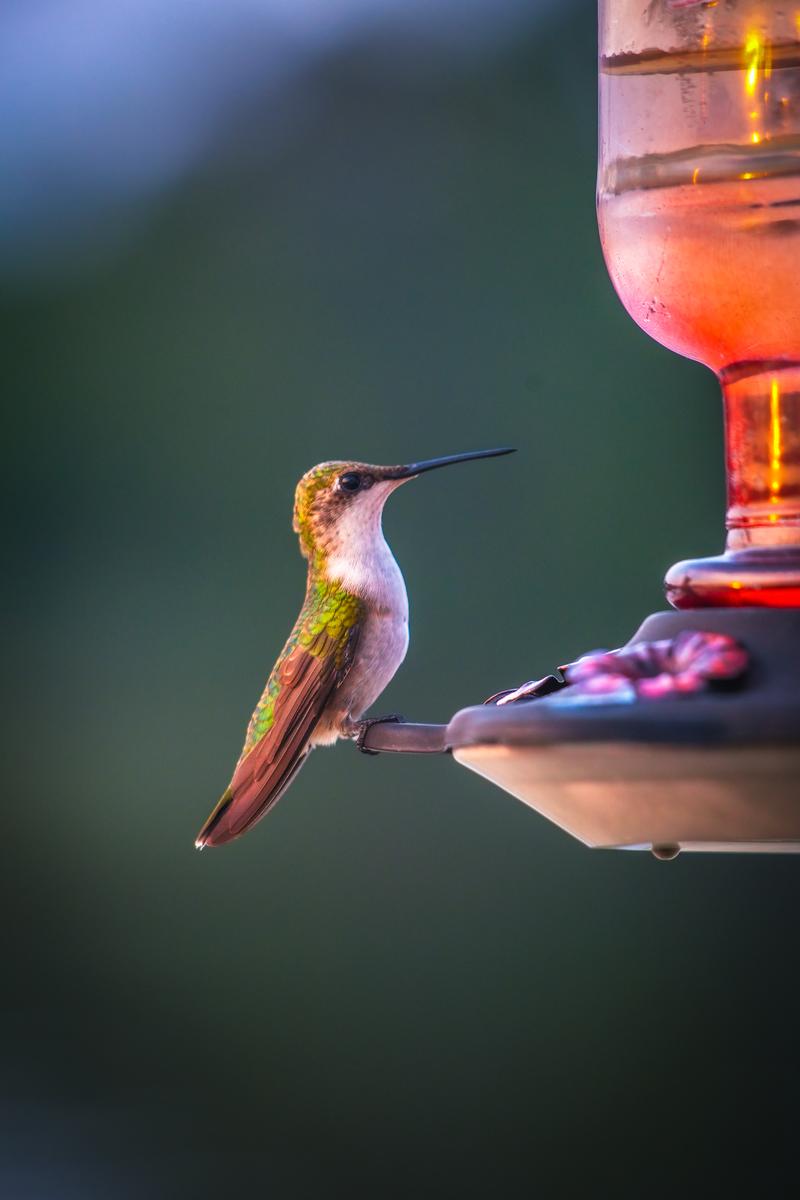
Hummingbird Perched Iridescent Green
An iridescent green hummingbird paused between flights
Zeefeldt Photography. Fine art prints starting at $95
3. Canon EOS 6D Mark II. Best Full-Frame Under $500
The EOS 6D Mark II is a full-frame DSLR that now regularly lands under $500 used or refurbished. Its 26.2MP full-frame sensor delivers excellent high-ISO performance, important for low-light wildlife scenarios like dawn and dusk shooting. The 45-point all cross-type AF system is accurate though not the fastest for tracking erratic subjects. For stationary wildlife, bird perching shots, and mammal photography where subjects are more predictable, the image quality and full-frame background separation are outstanding for the price. The extensive EF lens library is a major advantage, decades of excellent glass available used.
Key specs: 26.2MP full-frame | 45-point AF | Weather sealed | EF mount | 765g
What Matters Most for Wildlife Photography
The three critical specs for wildlife: autofocus tracking accuracy (does it hold onto moving subjects?), burst speed (how many frames per second in RAW?), and sensor reach via crop factor or paired with long lenses. Beyond the camera body, the lens is equally important, a budget camera with a good 400mm telephoto will outperform an expensive camera with an inadequate lens. For under $500 total budgets, the Sony a6400 body paired with a used Sony 70-350mm G lens is a compelling wildlife kit.
Frequently Asked Questions
How many megapixels do I need for wildlife photography?
24MP is the practical minimum for wildlife photography where you often crop significantly. More resolution gives more flexibility to crop and still have printable files. The 26-32MP range in cameras like the Canon EOS R7 and Sony a6700 is ideal, but 24MP cameras like the a6400 and R50 produce excellent results with proper technique.
Do I need weather sealing for wildlife photography?
Weather sealing is highly recommended for wildlife photography, you’ll often be out in rain, near water, and in humid conditions where moisture can damage an unprotected camera. The Sony a6400 and Canon EOS R50 lack weather sealing, which is their main practical drawback for serious outdoor use. If you’re shooting in unpredictable conditions, consider stepping up to the Sony a6700 or Canon EOS R7 which are sealed.
Frequently Asked Questions
What is the best camera for wildlife photography under $500?
The best camera for wildlife photography under $500 depends on your specific needs, but key factors include sensor size, autofocus performance, weather sealing, and battery life. Our top picks balance image quality with value, making them ideal for photographers at every level.
Do I need a full-frame camera for wildlife photography?
Not necessarily. APS-C and Micro Four Thirds cameras offer excellent image quality for wildlife photography at a lower cost. Full-frame sensors provide better low-light performance and shallower depth of field, but modern crop-sensor cameras can produce stunning results.
What features should I look for when buying a camera for photography?
Look for a camera with a large sensor (APS-C or full-frame), reliable autofocus, at least 24MP resolution, weather sealing if shooting outdoors, good battery life, and compatibility with the lenses you plan to use.
Browse more nature photography tutorials, gear reviews, and field tips.
Download our guide: exposure, ISO, and aperture strategies for every light condition and terrain.
We respect your inbox. One guide, occasional tips, unsubscribe anytime.