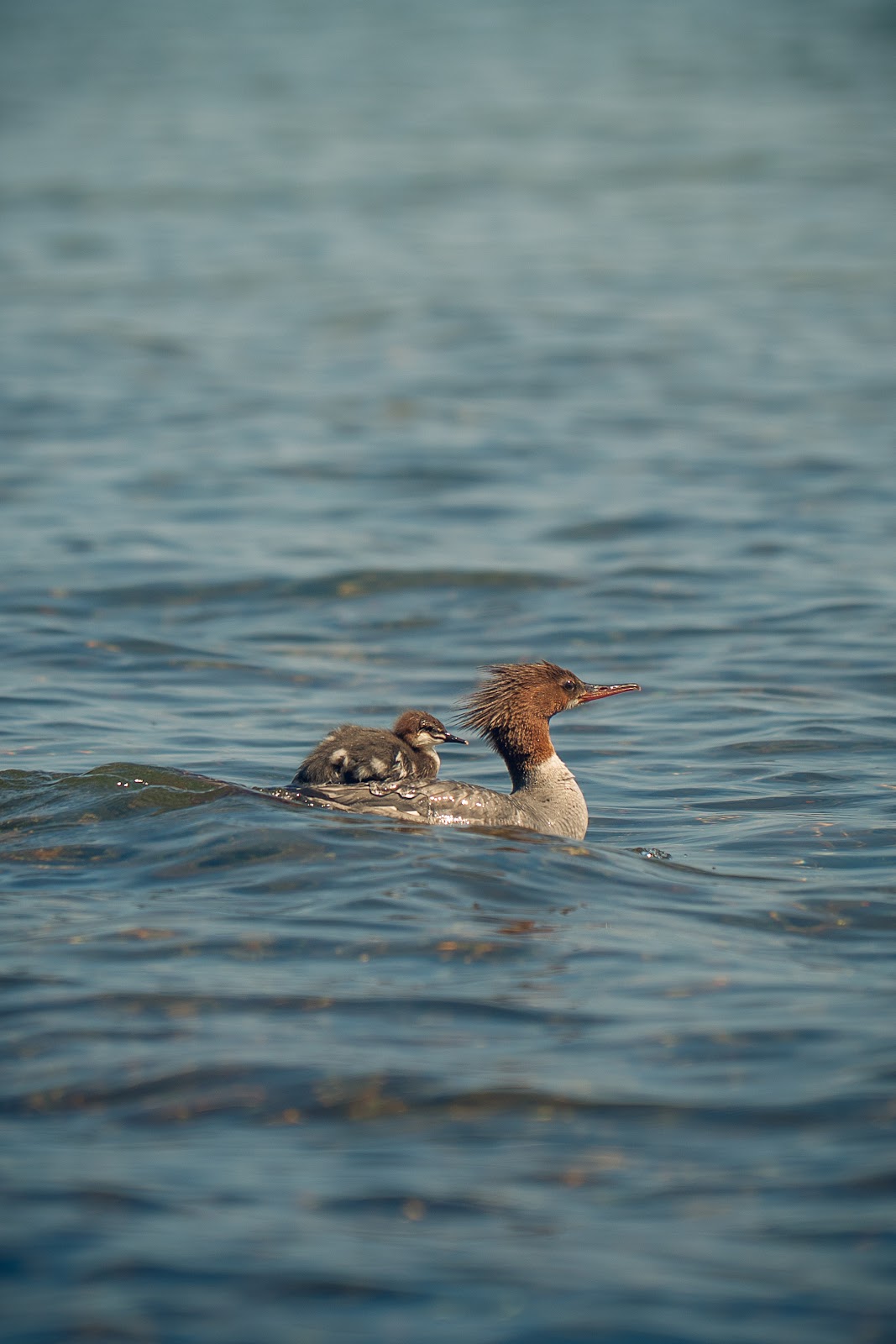
Consider the shot that separates bird cameras from ordinary ones: a great blue heron lifting off a marsh at first light, three wingbeats, standing to airborne in roughly 1.2 seconds, against a flat grey sky and a background wall of reeds. An older body will typically return a handful of sharp frames out of a thirty-frame burst. The rest come back slightly soft, motion-blurred, or with the subject clipped because the autofocus could not predict where the bird was going.
A current subject-detection system in the same light, with the same lens and the same bird behaviour, will hold that sequence for the great majority of the burst. The variable is not the photographer or the glass, it is the autofocus architecture.
Bird photography is the discipline where camera choice matters most in the mirrorless era. This guide covers what actually matters and ranks the best options in 2026.
What to Look for in a Bird Photography Camera
Autofocus with real bird/eye detection: Not just face detection, not just subject tracking – actual bird-eye lock that works in flight against complex backgrounds. This is the single biggest differentiator between cameras for this application. The gap between the best and worst AF systems for birds in flight is enormous.
Burst rate: For birds in flight, 15fps is a reasonable minimum. 20–30fps is better. 120fps (Sony A9 III) is extraordinary but overkill for most situations. What matters is sustained burst – how many frames at full resolution before the buffer fills. A camera that shoots 30fps but fills after 8 frames is less useful than one that shoots 20fps with a 40-frame buffer.
Reach: Focal length is the real constraint in bird photography. A crop sensor’s 1.5x multiplier effectively extends your telephoto reach – a 500mm becomes 750mm equivalent. This is a legitimate reason to consider APS-C for bird work despite its sensor size disadvantages.
Weather sealing: Birds are where you are – marshes, shorelines, forest edges, and coastal areas. All of these involve moisture, humidity, and occasional rain. Solid weather sealing is not optional for serious bird photography.
Best Cameras for Bird Photography (2026)
1. Sony A9 III – Best Overall for Bird Photography
The A9 III is definitively the best bird photography camera on this list. Its global shutter sensor eliminates rolling shutter artifacts entirely and enables flash sync at any shutter speed – but the feature that matters for bird work is the combination: 120fps blackout-free shooting with a buffer that doesn’t fill on normal sequences, paired with Sony’s AI-based bird AF that is the best in the industry. With sandhill cranes in flight over open marsh at 30mph in variable light, the A9 III locks eye contact on birds that were smaller than your thumbnail in the frame.
The stacked sensor also means you can use electronic shutter at 120fps without any rolling shutter banding – something that plagued earlier high-speed cameras and made shooting birds against uniform skies produce wavy, distorted backgrounds. The A9 III is clean at speeds the older Sony A9 II couldn’t touch.
24MP is lower resolution than many cameras on this list, which is the deliberate tradeoff Sony made for speed. For bird photography specifically, 24MP is enough – your limiting factor is usually optical (lens resolution, heat shimmer, distance) not sensor pixel count. When you need to crop to 25% of the frame to get a composition, 24MP still delivers a publishable image.
The limitation: Price. The A9 III costs significantly more than everything else here. If budget is a constraint, the Nikon Z8 closes the gap substantially.
2. Nikon Z9 – Best for Nikon Shooters
The Z9 was the camera that proved mirrorless could replace the flagship DSLR for professional wildlife work, and it’s aged well. Its stacked sensor shoots 20fps RAW without blackout, its bird AF is excellent – it is the second-best bird-eye AF system available – and the build quality is the most robust of any camera here. The Z9 also has no mechanical shutter, which means no shutter wear and no vibration from shutter actuation at high burst rates.
For existing Nikon users with a library of Z-mount glass, the Z9 is the natural destination. For anyone starting fresh, the A9 III or Z8 represents better value. The Z9 is large and heavy – it’s a pro body that handles like one – which is fine at a hide or from a vehicle but less ideal for hiking.
3. Nikon Z8 – Best Value Professional Bird Camera
The Z8 is the Z9’s feature set in a lighter, less expensive body. It shoots 20fps RAW, has Nikon’s excellent bird AF, and provides the same stacked sensor performance as the Z9 in a form factor that’s 30% lighter. The practical difference between the Z9 and Z8 for bird photography is primarily ergonomics and build robustness – the image quality and AF capability are nearly identical.
For photographers who want flagship bird photography performance without Z9 pricing, the Z8 is the logical choice. It holds up in shorebird work, tracking turnstones and dunlins through fast-moving mixed flocks. The AF acquisition speed – the time between pressing the shutter and the system locking on the bird’s eye – is genuinely fast. Misses happen when a bird passes behind a reed and re-emerges; the system picks it back up within one or two frames.
4. Canon EOS R5 Mark II – Best Canon Body for Birds
Canon’s R5 Mark II brings the company’s DPAF to its mature form with genuine bird-eye tracking that holds up well in flight sequences. It shoots 30fps in electronic shutter mode, has 45MP resolution – the highest of any camera here – and pairs superbly with Canon’s RF 100–500mm and RF 600mm options.
The 45MP sensor is more than you need for pure bird photography but genuinely useful for the nature photographer who also shoots landscape and macro work and wants one body that handles everything. The R5 II’s AF doesn’t quite match Sony’s bird-eye detection in the most challenging scenarios – birds against complex backgrounds, fast directional changes – but in normal field conditions it’s excellent and the gap has narrowed considerably from the first R5.
5. Sony A6700 – Best APS-C Bird Camera
The A6700 is remarkable for its price. Sony transplanted the AI subject AF processor from the A7R V into a $1,400 APS-C body. For bird photography, this means you get near-flagship AF performance at the $1,400 price point – an unmatched value proposition. Pair it with the Sony 100–400mm GM and you have a 150–600mm equivalent system with the best AF available under $3,000 total.
The APS-C sensor handles high-contrast bird-in-flight scenarios reasonably well in good light, but shows limitations in pre-dawn blue light and backlit situations where full-frame sensors handle shadow noise better. For morning and midday bird shooting in decent light, the A6700 is hard to fault for the price.
6. OM System OM-1 Mark II – Best Compact Weather-Sealed Option
The OM-1 Mark II uses a Micro Four Thirds sensor (2x crop factor) which gives a 200mm lens the field of view of a 400mm – the most reach per dollar and per gram of any system here. The OM-1 II shoots 50fps RAW with Olympus’s pre-capture mode (it starts buffering before you press the shutter), which recovers sequences that would otherwise be missed. The build quality is exceptional – MIL-STD rated against dust and moisture – and the weather sealing is the most comprehensive of any camera here.
The honest limitation: MFT sensors show their boundaries at high ISO. Above ISO 3200, the noise is meaningfully more than full-frame. For dawn and dusk shooting, for overcast forest birds, or for any situation requiring ISO 6400+, the OM-1 Mark II’s sensor is the weakest of the group. In good light, it punches well above its sensor class. The reach and weather sealing advantages make it the right tool for photographers who prioritize compact size, reach, and outdoor durability.
Best Lenses for Bird Photography
For Sony: the Sony FE 200–600mm G OSS remains the benchmark for accessible wildlife telephoto. Optically superb, weather-sealed, and autofocus is reliable with all Sony bodies. The reach is genuine, not approximate. Pair it with the Sony 1.4x teleconverter for a 280–840mm equivalent when needed.
For Canon: the Canon RF 100–500mm L is optically excellent and pairs seamlessly with the R5 II’s AF system.
In-Field Settings for Bird Photography
Shoot at your fastest reliable shutter speed for the subject: 1/1600s minimum for perched birds that might take flight, 1/2500s or faster for birds in active flight. Use Auto ISO with a minimum shutter speed set – 1/2000s minimum is a solid default, with an Auto ISO ceiling of 12800 on full-frame and 6400 on APS-C. Let the camera handle ISO while you control shutter speed and composition.
For AF mode: use 3D tracking or Wide-Area AF rather than a small center zone. Give the AF system freedom to track the subject across the frame. For burst rate: 15–20fps is enough for most sequences; you’ll spend more time culling at 120fps than you will gaining keepers. The right burst rate is the fastest sustained rate your camera can maintain without buffer overflow.
Building a Bird Photography Kit on a Budget
Start with a used Sony A6700 or A6400 body ($800–1,100 used) and the Sony 100–400mm GM lens. This gives you the reach, the AF quality, and the handling for serious bird photography without the $4,000+ outlay of a flagship system. Add the 1.4x teleconverter for 560mm equivalent reach on the days when distance is the challenge. This kit handles 80% of bird photography situations well and grows with you as your skill and ambition increase.
Frequently Asked Questions
What is the best camera for beginner bird photography?
The Sony A6700 for anyone starting fresh, or the Sony A6400 used if budget is the constraint. Both have Sony’s bird-eye AF, both pair well with the 100–400mm GM, and both produce images that will far exceed the limitations of your skills as a beginner. Don’t start with a camera whose AF makes you work harder than the subject – it kills the joy and teaches bad habits.
Does bird photography require a full-frame camera?
No – and in some ways crop sensor is an advantage. APS-C and Micro Four Thirds give you more effective reach per dollar of glass. The Sony A6700 with a 200mm lens has the same field of view as a 300mm on full-frame. The limitation is low-light performance, which matters at dawn and dusk. If you shoot primarily in good light, APS-C is a legitimate choice.
How important is burst rate for bird photography?
Meaningful up to about 20fps, diminishing returns beyond that. What matters more than raw burst rate: buffer depth (how many frames before it fills), AF acquisition speed (time from acquiring subject to locking focus), and blackout duration between frames. A camera that shoots 15fps with a 40-frame buffer and near-zero blackout is more practical than one that shoots 30fps but fills its buffer after 10 frames.
Browse more nature photography tutorials, gear reviews, and field tips.
Download our guide: exposure, ISO, and aperture strategies for every light condition and terrain.
We respect your inbox. One guide, occasional tips, unsubscribe anytime.
Related Guides
 Best Digiscoping Adapters for Wildlife Photography (2026): 6 Picks for Extreme Reach on a Budget
 Best Camera Hides for Wildlife Photography (2026): 5 Portable Blinds for Getting Close