
Choosing your first camera for landscape photography shouldn’t be overwhelming. The truth is, almost any modern camera can take stunning landscape photos, but some make the process significantly easier and more enjoyable for beginners. If you’re searching for the best beginners camera for landscape photography, you want something with good dynamic range, easy-to-learn controls, and a lens system you can grow into.
After years of shooting the Great Lakes shoreline, Sleeping Bear Dunes, and Pictured Rocks, I’ve learned what actually matters when you’re starting out. Here are my recommendations for 2026.
Quick Picks: Top 3 Beginner Landscape Cameras
| Camera | Why It Stands Out | Price |
|---|---|---|
| Sony a6700 | Best overall, dynamic range, IBIS, huge lens selection | ~$1,398 |
| Canon EOS R50 | Most beginner-friendly, guided UI, lightweight | ~$679 |
| Nikon Z50 II | Best ergonomics, natural colors, intuitive controls | ~$1,097 |
What Makes a Great Beginner Landscape Camera?
Before diving into models, here’s what actually matters for landscape work. Dynamic range, the camera’s ability to capture bright skies and dark foregrounds in a single shot. Resolution, more megapixels mean bigger prints and more cropping room. Ease of use, as a beginner, you need controls that make sense so you can focus on composition instead of fighting menus. Weather durability, landscapes mean outdoor shooting in all conditions. And lens ecosystem, you need access to quality wide-angle lenses at reasonable prices.
Detailed Camera Reviews
1. Sony a6700. Best Overall for Beginner Landscape Photographers
The Sony a6700 keeps appearing on every list for a reason. The 26MP APS-C sensor delivers ~13.5 stops of dynamic range at ISO 100, which rivals some full-frame cameras from a few years ago. The 5-axis IBIS means you can shoot handheld in lower light without a tripod, useful for golden hour when you forgot yours.
Specs: 26MP, APS-C, 5-axis IBIS, ISO 100-32000, 11fps, weather-sealed, 17.0 oz, ~$1,398
Pros: Excellent dynamic range, reliable autofocus for any shooting scenario, compact body, USB-C charging (use a power bank on long hikes), extensive E-mount lens options.
Cons: Menu system has a learning curve, single card slot, kit lens is mediocre, budget an extra $300-400 for a better landscape lens like the Tamron 11-20mm f/2.8.
Best for: Beginners who want one camera that does everything well and won’t need replacing for years.
2. Canon EOS R50. Easiest Camera for New Landscape Photographers
Canon designed the EOS R50 specifically for people picking up a dedicated camera for the first time. The Guided UI mode translates camera settings into plain English, instead of “aperture f/8,” it shows you a slider from “blurry background” to “everything sharp.” For landscape composition, you’ll want everything sharp, and the camera walks you there.
Specs: 24.2MP, APS-C, no IBIS, ISO 100-32000, 12fps, no weather sealing, 13.1 oz, ~$679
Pros: Lightest interchangeable-lens camera on this list, Guided UI is genuinely helpful for learning, vari-angle touchscreen for creative angles, Canon’s color science is excellent for natural scenes, very affordable with kit lens.
Cons: No IBIS (need a tripod for slow shutter speeds), no weather sealing (be careful in rain), electronic viewfinder is small.
Best for: True beginners who want the gentlest possible learning curve at the lowest price point.
3. Nikon Z50 II. Best Ergonomics for Landscape Beginners
The Nikon Z50 II simply feels right in your hands. The grip, button layout, and menu design are intuitive in a way that’s hard to quantify but immediately noticeable. Nikon’s color science produces warm, natural tones that landscape photographers love, autumn foliage and golden hour scenes look gorgeous straight out of camera.
Specs: 20.9MP, APS-C, no IBIS, ISO 100-51200, 11fps, partial sealing, 14.6 oz, ~$1,097
Pros: Natural color rendition that prints beautifully, comfortable ergonomics, i-menu system for quick adjustments, good DX lens selection, solid build quality.
Cons: No IBIS, battery life is below average (carry a spare), 20.9MP is adequate but lower than competitors.
Best for: Beginners who value handling comfort and natural color science, especially if you prefer a more traditional camera feel.
4. Fujifilm X-T30 II. Best for Artistic Landscape Work
The Fujifilm X-T30 II is for beginners who are drawn to photography as art, not just documentation. The film simulation modes give your landscapes distinct moods. Velvia for saturated sunsets, Astia for soft pastels, Classic Chrome for documentary-style tones. The retro-styled body with physical dials forces you to think about your settings, which accelerates learning.
Specs: 26.1MP, APS-C X-Trans, no IBIS, ISO 160-12800, 8fps, no weather sealing, 13.2 oz, ~$899
Pros: Unique film simulations for distinctive landscape looks, physical aperture/shutter/ISO dials, excellent 26.1MP X-Trans sensor, compact and stylish design.
Cons: No IBIS, no weather sealing, autofocus is slightly slower than Sony/Canon, small grip can be uncomfortable for longer shoots.
Best for: Creatively-minded beginners who want their images to have character straight out of camera.
5. Nikon Z5. Best Budget Full-Frame for Landscapes
If you can stretch your budget, the Nikon Z5 offers full-frame image quality at a relatively accessible price. The 24.3MP sensor with IBIS delivers clean images even in challenging light, and full-frame sensors inherently capture more dynamic range, critical for high-contrast landscape scenes with bright skies and dark foregrounds.
Specs: 24.3MP, full-frame, 5-axis IBIS, ISO 100-51200, 4.5fps, weather-sealed, 23.6 oz, ~$1,397
Pros: Full-frame dynamic range at a competitive price, 5-axis IBIS, dual SD card slots, weather-sealed construction, access to Nikon’s exceptional Z-mount lens lineup.
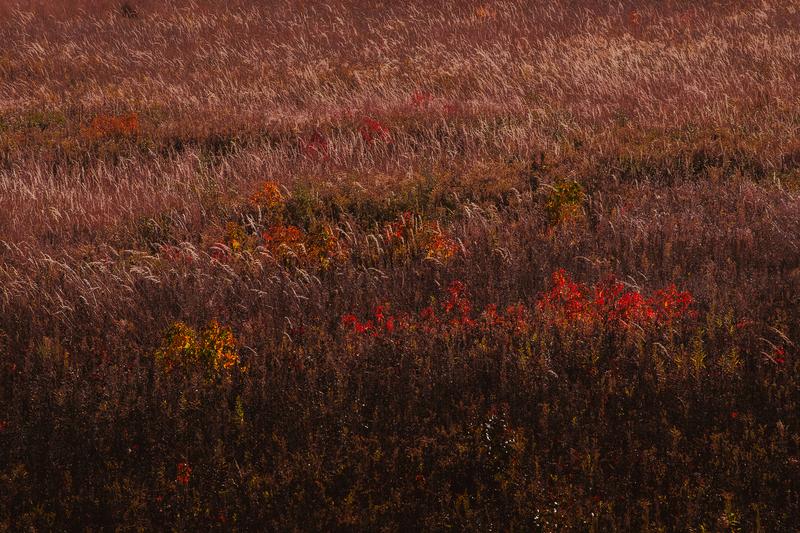
From the Photographer
Autumn Meadow Golden Grasses
A quiet autumn meadow bathed in golden light
Zeefeldt Photography
. Fine art prints starting at $95
Cons: Heavier and larger than APS-C options, lower burst rate (4.5fps), autofocus is older generation, Z-mount landscape lenses can be expensive.
Best for: Beginners who are serious about landscape photography and want to start with a system they’ll never outgrow.
6. Panasonic Lumix G9 II. Best for Computational Photography
The Panasonic Lumix G9 II packs computational photography features that are genuinely useful for landscapes. The 100MP High-Res mode composites multiple frames for incredible detail, Live ND simulation works without physical filters, and the phase-detect autofocus (a first for Panasonic MFT) is much improved over older models.
Specs: 25.2MP, Micro Four Thirds, 5-axis IBIS (8 stops), 60fps electronic, 4K 120p video, weather-sealed, 22.9 oz, ~$1,798
Pros: 100MP high-res mode for large prints, built-in Live ND filter, best-in-class IBIS (8 stops), weather-sealed, excellent 4K video if you want to dabble.
Cons: Pricier than most options here, MFT sensor limits low-light performance, larger/heavier than other MFT bodies, lens ecosystem is mature but not growing much.
Best for: Tech-savvy beginners who want cutting-edge computational features for creative landscape techniques.
Comparison Table
| Camera | Sensor | MP | IBIS | Weather Sealed | Weight | Price |
|---|---|---|---|---|---|---|
| Sony a6700 | APS-C | 26 | Yes | Yes | 17.0 oz | $1,398 |
| Canon EOS R50 | APS-C | 24.2 | No | No | 13.1 oz | $679 |
| Nikon Z50 II | APS-C | 20.9 | No | No | 14.6 oz | $1,097 |
| Fujifilm X-T30 II | APS-C | 26.1 | No | No | 13.2 oz | $899 |
| Nikon Z5 | Full-Frame | 24.3 | Yes | Yes | 23.6 oz | $1,397 |
| Panasonic G9 II | MFT | 25.2 | Yes | Yes | 22.9 oz | $1,798 |
What Lens Should Beginners Buy for Landscapes?
The camera body is half the equation. For landscape photography, your first lens should be a wide-angle zoom. Here are my budget-friendly recommendations by mount:
Sony E-mount: Tamron 11-20mm f/2.8 (~$329), sharp, fast, affordable.
Canon RF-S: Canon RF-S 10-18mm f/4.5-6.3 IS STM (~$299), tiny, stabilized, cheap.
Nikon Z DX: Nikon Z DX 12-28mm f/3.5-5.6 (~$357), versatile range, light weight.
Fujifilm X: Fujifilm XF 10-24mm f/4 R OIS WR (~$999), pricier but weather-sealed and stabilized.
Tripod Recommendation for Beginners
Landscape photography and tripods go hand in hand. Even a $30 tripod dramatically improves your landscape shots by enabling slower shutter speeds, precise composition, and sharper images. Check out our guide to the best affordable tripods for specific recommendations.
For a broader look at mirrorless options beyond landscape, check out our guide to the best budget mirrorless camera for photography.
Want more digital camera options? Our best budget digital camera for landscape photography guide covers the full range.
Frequently Asked Questions
What is the best beginners camera for landscape photography?
The Sony a6700 is the best overall choice for beginners due to its dynamic range, IBIS, and extensive lens selection. For those on a tight budget, the Canon EOS R50 at $679 offers excellent image quality with the easiest learning curve.
Do I need an expensive camera for landscape photography?
No. A $679 Canon EOS R50 or $899 Fujifilm X-T30 II can produce stunning landscape images. The most important factors are good light, strong composition, and learning your camera’s capabilities, not the price tag.
Should I start with APS-C or full-frame for landscapes?
Start with APS-C. Modern APS-C sensors deliver excellent dynamic range and resolution, and the cameras and lenses are significantly lighter and cheaper. You can always upgrade to full-frame later if you find you need more dynamic range or want to print very large.
What camera settings should beginners use for landscape photography?
Start with Aperture Priority mode (A or Av on the dial), set aperture to f/8 or f/11 for maximum sharpness across the frame, keep ISO at 100, and let the camera choose the shutter speed. Use a tripod if the shutter speed drops below 1/60s.
Is a mirrorless camera better than a DSLR for landscape photography?
In 2026, mirrorless cameras offer clear advantages for landscape photography: real-time exposure preview, focus peaking for manual focus precision, lighter weight, and electronic shutters that eliminate mirror vibration. Most manufacturers have stopped developing new DSLR bodies.
Final Verdict
The best beginners camera for landscape photography depends on your budget and priorities. The Sony a6700 is the gold standard for a reason, it excels at everything and has the deepest lens ecosystem. The Canon EOS R50 is the smartest value pick at $679. And the Nikon Z5 is the best path into full-frame if you’re ready to commit long-term.
Whichever camera you choose, remember: the best landscape camera is the one you actually take outside and shoot with. Start with what fits your budget, learn the fundamentals, and upgrade when your skills outgrow your gear.
Browse more nature photography tutorials, gear reviews, and field tips.
Download our guide: exposure, ISO, and aperture strategies for every light condition and terrain.
We respect your inbox. One guide, occasional tips, unsubscribe anytime.
Related Guides
 How to Photograph the Milky Way: Settings, Planning & Post-Processing
 Mastering Long Exposure Photography: A Complete Guide to Silky Water & Dramatic Skies
 Best Tripods for Landscape Photography (2026): 7 Picks From Budget to Pro
 How to Photograph Waterfalls: Getting Silky Smooth Water with the Right Settings