Quick Answer
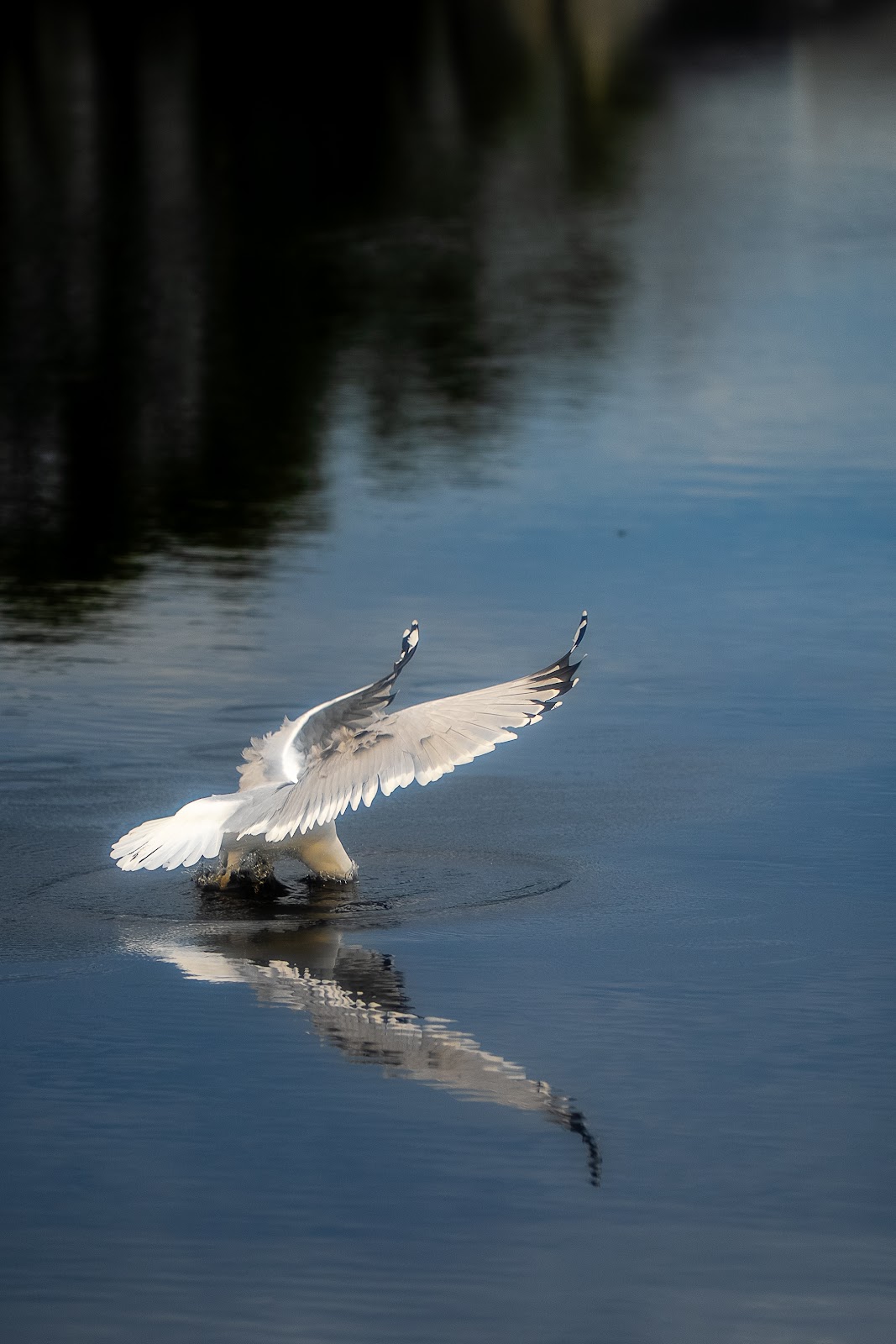
To photograph birds in flight, use shutter priority or manual mode with a shutter speed of at least 1/2000s, continuous autofocus (AF-C / AI Servo) paired with a wide or zone AF area, burst drive mode, and Auto ISO capped to keep exposures fast. Pre-focus on the bird before it launches, pan smoothly through the frame, and keep both eyes open to track the bird beyond the viewfinder. Practice on slow, predictable fliers like gulls and herons before chasing fast songbirds.
There is a moment every wildlife photographer remembers: a bald eagle drops off a snag, banks hard toward the water, and in the half-second it takes to react, the bird is gone and your frame holds nothing but blurry branches. Birds in flight are the hardest common subject in nature photography. They are fast, unpredictable, and rarely cooperative. But the difference between a wall of throwaways and a portfolio of crisp, wings-spread keepers is not a $12,000 lens. It is technique, camera setup, and reps. This guide walks through every setting and field skill you need to start nailing flight shots with the gear you already own.
Why Birds in Flight Are So Difficult
Three problems stack on top of each other. First, motion blur: a bird’s wingtips can travel several feet per second, so anything slower than about 1/1600s smears the feathers. Second, autofocus tracking: your camera has to lock onto a small, erratic subject and hold it against a busy or blown-out sky. Third, your own reaction time: by the time your brain registers the launch, the bird has already moved. Solving flight photography means setting up the camera so it does the fast work, and training yourself to do the slow work of anticipation.
Camera Settings for Birds in Flight
Start here and adjust to conditions. These settings prioritize a frozen subject over everything else.
Shutter Speed
This is the single most important dial. For large soaring birds (eagles, herons, pelicans) 1/1600s is a workable floor. For ducks, shorebirds, and anything flapping hard, push to 1/2500s or faster. For small fast songbirds and hummingbirds, 1/3200s and up. When in doubt, faster is safer; you can always recover a little noise, but you cannot recover smeared wings.
Aperture
Shoot wide open or close to it, typically f/5.6 to f/8. Wide apertures let in light so you can keep shutter speed high, and they throw busy backgrounds out of focus. Stopping down to f/8 buys a little depth of field margin if your autofocus occasionally lands on a wingtip instead of the head.
ISO and Auto ISO
Set Auto ISO with a generous ceiling (ISO 3200 or 6400 on a modern body). Lock your shutter speed and aperture, and let ISO float to hold the exposure. A slightly noisy sharp bird beats a clean blurry one every time.
Autofocus Mode
Use continuous autofocus: AF-C on Nikon and Sony, AI Servo on Canon. This keeps the lens hunting and refocusing as the distance changes. Pair it with a wide-area, zone, or subject-tracking AF mode rather than a single point, which is nearly impossible to keep pinned on a moving bird. If your camera has animal or bird-eye detection, turn it on; it is genuinely transformative on recent bodies.
Drive Mode
Shoot in continuous high burst. Flight is a sequence, and the keeper is often three frames into a series where the wings hit the perfect position. Use the fastest mechanical or electronic burst your buffer can sustain.
Settings Cheat Sheet
| Subject | Shutter Speed | Aperture | AF Mode |
|---|---|---|---|
| Eagles, herons, large raptors | 1/1600 – 1/2000s | f/5.6 – f/8 | AF-C, zone |
| Ducks, gulls, shorebirds | 1/2500 – 1/3200s | f/5.6 – f/8 | AF-C, wide/tracking |
| Songbirds, swallows | 1/3200 – 1/4000s | f/4 – f/6.3 | AF-C, tracking + eye AF |
| Hummingbirds (wings frozen) | 1/4000s+ | f/5.6 – f/8 | AF-C, single/zone |
Field Technique: The Part Gear Cannot Fix
Once the camera is dialed, your job is anticipation and smooth movement.
Pre-Focus and Read Behavior
Birds telegraph takeoff. They lean forward, crouch, defecate to lighten themselves, and often launch into the wind. Watch a perched bird and pre-focus on it so your lens is already in the right range when it goes. Learn your local species’ habits and you will predict launches before they happen.
Pan Through the Bird
Track the bird with your whole upper body, rotating from the hips, and keep panning through the moment you press the shutter and after. Stopping your pan at the click is the most common cause of soft flight shots. A monopod or gimbal head helps with heavy lenses, but smooth handholding works for shorter glass.
Keep Both Eyes Open
Your non-viewfinder eye sees the bird approaching the frame so you can acquire it earlier. It feels strange at first and becomes second nature within a few outings.
Shoot With the Light and Wind Behind You
Position the sun behind your shoulder for front-lit, evenly exposed birds. Because birds take off and land into the wind, standing with the wind at your back means they fly toward you, giving you approaching head-on and belly-lit angles instead of going-away shots.
Composition for Flight Shots
Leave space in front of the bird for it to “fly into” rather than centering it. Aim for catchlight in the eye and a clean wing position, ideally wings up or fully extended rather than mid-blur. A clean sky or distant uncluttered background separates the subject. Slightly underexpose against bright sky to protect highlight detail in white feathers, then lift shadows in post.
Practice Progression
Do not start with swallows. Build up. Begin with gulls at a beach or pier; they are large, slow, abundant, and will fly repeated predictable passes for a handful of bread-free patience. Move to herons and egrets, then ducks coming into a pond, then raptors, and finally fast songbirds. Each step trains your tracking and timing on a slightly harder target.
Frequently Asked Questions
What shutter speed do I need for birds in flight?
1/1600s is the minimum for large soaring birds. Most situations are safer at 1/2500s, and small fast birds need 1/3200s or faster to freeze wingbeats.
Should I use single point or tracking autofocus?
Tracking or zone AF. A single point is extremely hard to keep on a moving bird. If your camera has bird-eye detection, combine it with a wide tracking area for the best lock rate.
Do I need a super telephoto lens?
It helps, but a 100-400mm or even a 70-300mm is plenty to learn on. Reach matters less than technique when you are starting; fill the frame by getting closer to predictable perches and flight paths.
How do I expose for a white bird against a bright sky?
Slightly underexpose, using exposure compensation of about -1/3 to -1 stop, to keep the white feathers from clipping. Recover shadow detail later. Spot or center-weighted metering on the bird also helps.
Why are my flight shots blurry even at high shutter speeds?
Usually autofocus missed the head, or you stopped panning at the shutter press. Confirm focus landed on the eye, and follow through your pan after the click.
Browse more nature photography tutorials, gear reviews, and field tips.
Download our guide: exposure, ISO, and aperture strategies for every light condition and terrain.
We respect your inbox. One guide, occasional tips, unsubscribe anytime.
Related Guides
 How to Photograph the Milky Way: Settings, Planning & Post-Processing
 Mastering Long Exposure Photography: A Complete Guide to Silky Water & Dramatic Skies
 Best Digiscoping Adapters for Wildlife Photography (2026): 6 Picks for Extreme Reach on a Budget
 Best Camera Hides for Wildlife Photography (2026): 5 Portable Blinds for Getting Close