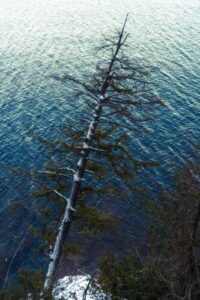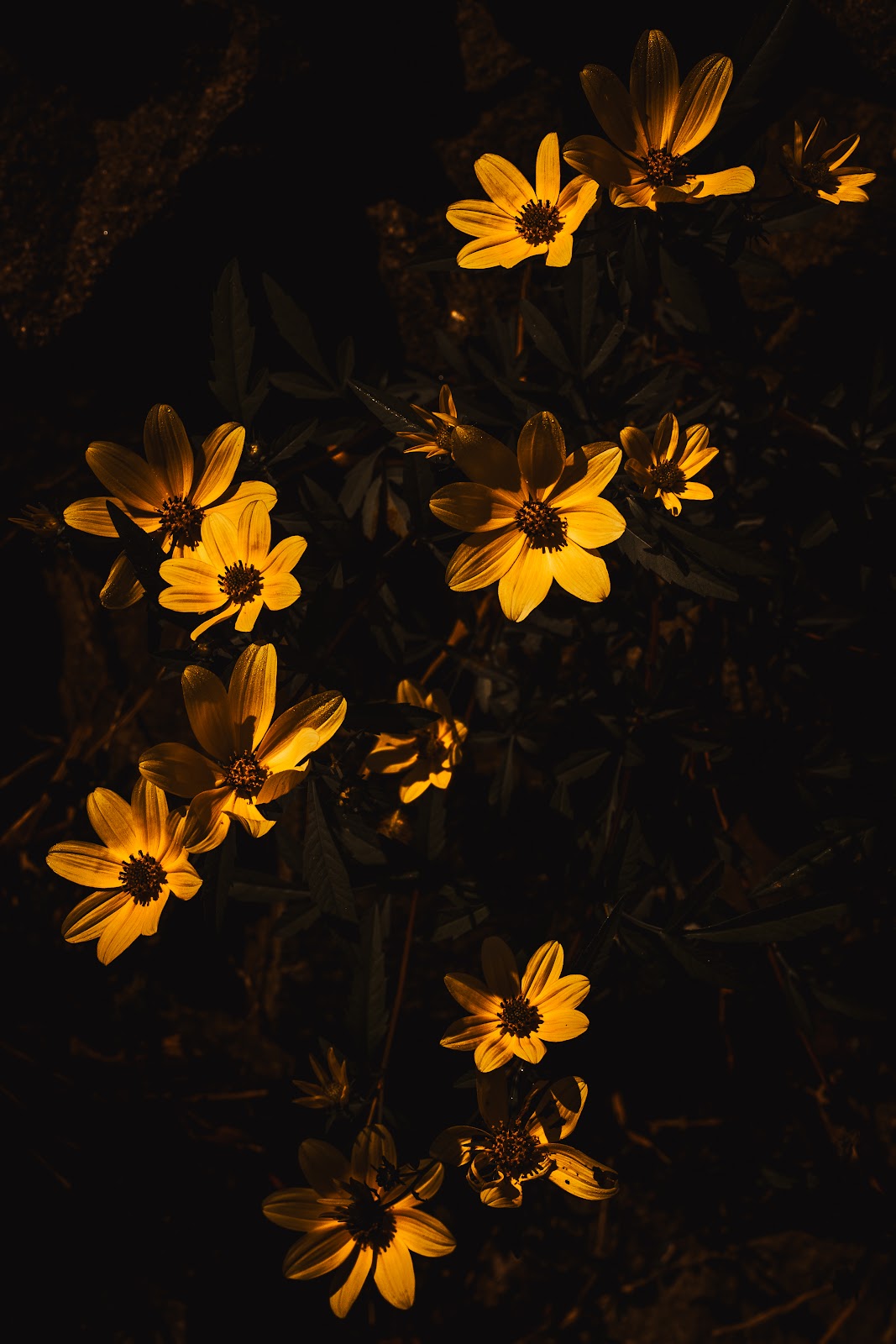
Nature photography throws more challenges at your camera than almost any other genre. One moment you’re shooting a still lake at dawn, the next you’re tracking a heron in flight. The best beginners camera for nature photography needs to handle this versatility, good autofocus for wildlife, strong dynamic range for landscapes, and enough resolution to crop when you can’t get closer.
I shoot nature across all four seasons in Michigan, from frozen waterfalls on the Upper Peninsula to wildflower meadows in the Lower Peninsula. Here are my recommendations for beginners who want a camera that handles the full spectrum of nature work.
Quick Picks: Top 3 Nature Photography Cameras for Beginners
| Camera | Why It Stands Out | Price |
|---|---|---|
| Sony a6700 | Best all-rounder, fast AF for wildlife, great dynamic range for landscapes | ~$1,398 |
| Fujifilm X-T50 | Highest resolution. 40.2MP for cropping distant subjects | ~$1,399 |
| Canon EOS R50 | Best budget option, capable AF, ultra-lightweight | ~$679 |
Why Nature Photography Cameras Need to Be Versatile
Unlike pure landscape or pure wildlife photography, nature photography combines both, plus macro, astrophotography, and everything in between. Your camera needs fast autofocus for moving subjects, wide dynamic range for harsh outdoor lighting, decent burst rate for action, and a lens system that covers wide-angle through telephoto. That’s a lot to ask from a beginner camera, but these picks deliver.
Detailed Reviews
1. Sony a6700. Best Overall Nature Camera for Beginners
The Sony a6700 is the Swiss Army knife of cameras. Its real-time tracking autofocus can lock onto a bird, an animal eye, or even an insect and hold focus through unpredictable movement. The 26MP sensor gives you enough resolution to crop meaningfully, and ~13.5 stops of dynamic range handles the contrasty conditions you’ll encounter shooting in forests and lakeshores.
Key specs: 26MP APS-C, 759-point PDAF, real-time tracking, 11fps, 5-axis IBIS, weather-sealed, 4K 120p, 17.0 oz.
Pros: Best-in-class autofocus for an APS-C camera, versatile for wildlife and landscape, compact and lightweight for hiking, massive E-mount lens ecosystem including affordable telephoto options.
Cons: Single card slot, kit lens is just OK, Sony color science can lean cool (adjust white balance warmth).
Price: ~$1,398 body only. Pair with the Sony 70-350mm f/4.5-6.3 (~$748) for wildlife and the Tamron 11-20mm f/2.8 (~$329) for landscapes.
2. Fujifilm X-T50. Best Resolution for Nature Beginners
The Fujifilm X-T50 packs a 40.2MP sensor into a compact body, giving you extraordinary cropping latitude. See a bird across the lake but only have a 200mm lens? Crop to 50% and you still have a 20MP image. For nature photography where you can’t always get close, this resolution advantage is meaningful.
Key specs: 40.2MP APS-C X-Trans, IBIS, 20fps electronic, ISO 125-12800, weather-resistant, 14.6 oz.
Pros: 40.2MP gives massive cropping latitude, film simulations for creative nature shots, physical dials for tactile control, IBIS for handheld shooting, excellent build quality.
Cons: Autofocus is slower than Sony for tracking fast wildlife, telephoto lens options are pricier in XF mount, menus can be confusing initially.
Price: ~$1,399 body only
3. Canon EOS R50. Best Budget Nature Camera
The Canon EOS R50 proves you don’t need to spend $1,400 to get started in nature photography. The Dual Pixel CMOS AF II system tracks birds and animals reliably, and 24.2MP is plenty of resolution for prints, web, and social media. At just 13.1 oz, it’s the lightest option, perfect for long trail hikes.
Key specs: 24.2MP APS-C, Dual Pixel CMOS AF II, animal/bird detection, 12fps, no IBIS, no weather sealing, 13.1 oz.
Pros: Incredibly affordable, lightest camera on this list, bird/animal eye detection AF, beginner-friendly guided UI mode, Canon RF-S lenses are competitively priced.
Cons: No IBIS, no weather sealing (bring a rain cover), buffer fills quickly during burst shooting, smaller grip.
Price: ~$679 body only
4. Nikon Z50 II. Best Ergonomics for Nature Shooting
The Nikon Z50 II feels like it was designed by someone who actually shoots in the field. The grip is comfortable during long sessions, the button layout is logical, and the i-menu system gives you quick access to the settings you change most. Nikon’s warm color science is particularly flattering for autumn foliage, golden-hour wildlife, and green forest scenes.
Key specs: 20.9MP APS-C, hybrid PDAF, 11fps, no IBIS, 3.2″ tilting touchscreen, 14.6 oz.
Pros: Best-in-class ergonomics, natural warm color rendition, growing DX lens ecosystem, solid build quality, comfortable for all-day shooting.
Cons: 20.9MP limits cropping compared to higher-resolution sensors, no IBIS, shorter battery life than competitors.
Price: ~$1,097 with kit lens
5. OM System OM-5. Best for Macro and All-Weather Nature
The OM System OM-5 shines in two areas that nature photographers love: macro work and all-weather durability. The focus stacking feature automatically captures multiple focus points and composites them into one razor-sharp image, perfect for flowers, insects, and small details. IP53 weather sealing means you can shoot in rain, snow, and mist without worry.
Key specs: 20MP MFT, 5-axis IBIS (6.5 stops), 10fps, IP53 weather sealed, handheld high-res 50MP mode, Live ND filter, 14.5 oz.
From the Photographer
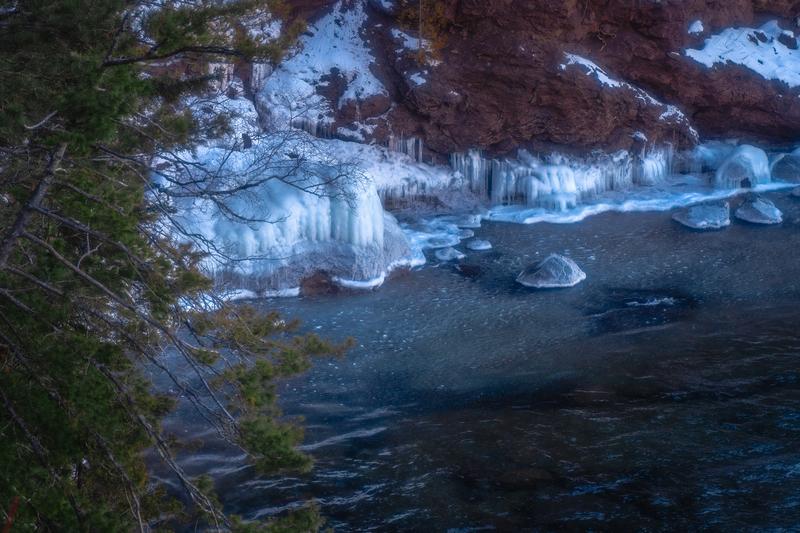
Frozen Waterfall Ice Winter
A frozen waterfall suspended in winter silence
Zeefeldt Photography
. Fine art prints starting at $95
Pros: Best weather sealing in this class, in-camera focus stacking for macro, built-in Live ND filter, lightweight system with MFT lenses, computational features are genuinely useful for nature work.
Cons: Smaller MFT sensor limits high-ISO performance, 20MP is lower than APS-C competitors, fewer new lenses being released.
Price: ~$1,199 body only
6. Sony a7C II. Best Full-Frame Nature Camera for Beginners
For beginners who want the absolute best image quality and can justify the investment, the Sony a7C II delivers full-frame performance in a compact package. The 33MP sensor captures detail that APS-C sensors simply can’t match, especially in low-light forest conditions or dawn/dusk wildlife encounters.
Key specs: 33MP full-frame, 5-axis IBIS (7 stops), real-time tracking AF, 10fps, weather-sealed, 530 shots per charge, 18.7 oz.
Pros: Full-frame dynamic range and low-light performance, compact for a full-frame body, excellent AI-based autofocus, outstanding battery life, vast Sony FE lens ecosystem.
Cons: FE lenses are heavier and more expensive, single card slot, higher entry cost, some controls feel cramped for larger hands.
Price: ~$2,098 body only
Comparison Table
| Camera | Sensor | MP | IBIS | Weather Sealed | Burst | Weight | Price |
|---|---|---|---|---|---|---|---|
| Sony a6700 | APS-C | 26 | Yes | Yes | 11fps | 17.0 oz | $1,398 |
| Fujifilm X-T50 | APS-C | 40.2 | Yes | Partial | 20fps | 14.6 oz | $1,399 |
| Canon EOS R50 | APS-C | 24.2 | No | No | 12fps | 13.1 oz | $679 |
| Nikon Z50 II | APS-C | 20.9 | No | Partial | 11fps | 14.6 oz | $1,097 |
| OM System OM-5 | MFT | 20 | Yes | Yes (IP53) | 10fps | 14.5 oz | $1,199 |
| Sony a7C II | FF | 33 | Yes | Yes | 10fps | 18.7 oz | $2,098 |
Essential Lenses for Beginner Nature Photography
Nature photography demands range. You’ll want at least two lenses to start: a wide-angle zoom for landscapes and a telephoto for wildlife. Here’s a budget-friendly starter kit for each system:
Sony: Tamron 11-20mm f/2.8 ($329) + Sony 70-350mm f/4.5-6.3 ($748) = $1,077 total
Canon: Canon RF-S 10-18mm f/4.5-6.3 ($299) + Canon RF-S 55-210mm f/5-7.1 ($349) = $648 total
Nikon: Nikon Z DX 12-28mm f/3.5-5.6 ($357) + Nikon Z DX 50-250mm f/4.5-6.3 ($397) = $754 total
For a deeper dive into mirrorless options specifically, check out our guide to the best budget mirrorless camera for beginners.
Frequently Asked Questions
What is the best camera for nature photography for beginners?
The Sony a6700 is the best all-around nature camera for beginners, offering excellent autofocus for wildlife, strong dynamic range for landscapes, weather sealing, and the largest lens ecosystem. Budget-conscious beginners should consider the Canon EOS R50 at $679.
Can I do nature photography with a phone?
Modern phones can capture good landscape photos, but they struggle with wildlife (limited zoom), macro (limited close-focus), and challenging light (limited dynamic range). A dedicated camera with interchangeable lenses gives you far more creative control and image quality.
What is the most important camera feature for nature photography?
Versatility. Nature photography requires good autofocus for wildlife, dynamic range for landscapes, weather resistance for outdoor use, and a good lens system. If forced to pick one feature, autofocus performance is most critical since you can bracket for dynamic range but can’t fix missed focus.
Do I need a telephoto lens for nature photography?
For wildlife, yes, a telephoto lens in the 200-400mm range (equivalent) is essential because you can’t approach wild animals closely. For landscapes and macro, you’ll need different lenses. Budget at least one telephoto and one wide-angle.
How much should I spend on my first nature photography camera?
A capable beginner setup (body + wide-angle + telephoto) starts around $1,300 with the Canon EOS R50 system or $2,400-2,500 with the Sony a6700 system. Invest in lenses over the body, a cheaper body with great lenses beats an expensive body with kit lenses.
Final Verdict
The best beginners camera for nature photography is the Sony a6700, its autofocus tracks wildlife reliably, the dynamic range handles landscapes beautifully, and the E-mount lens ecosystem covers every focal length you’ll need. If you’re on a tighter budget, the Canon EOS R50 at $679 is a remarkable value that covers landscapes and casual wildlife well.
Browse more nature photography tutorials, gear reviews, and field tips.
Download our guide: exposure, ISO, and aperture strategies for every light condition and terrain.
We respect your inbox. One guide, occasional tips, unsubscribe anytime.